
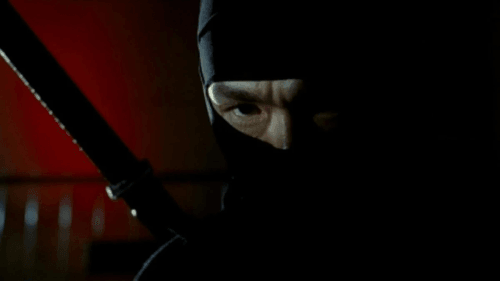
Gunfire shatters the majesty of a State occasion. The King of Portugal and his son fall dying, victims of an assassin, a man who kills for an ideal. Once, a drugged dream or a religious fervour drove the assassin to kill. Today, his motivation may have more to do with politics . . .
It was October, in the year 1092, and the Grand Vizier of Turkey, Nizam-al-Mulk, was holding an audience in his tent. Guards armed with scimitars surrounded him: for he was one of the most powerful men in the Middle East, and many people wished him dead. The audience came to an end; Nizam climbed into his litter, and signalled the slaves to carry him out. At the door, a half-naked holy man, a Sufi, came forward to kiss Nizam’s hand. The guards stood aside to allow him to approach. Suddenly, the holy man drew a knife from his trousers, and stabbed Nizam to the heart.
The guards leapt forward, and within seconds, the holy man had been cut to pieces. But he had carried out his instructions, instructions that came from his chief, known as The Old Man of the Mountain. And Nizam-al-Mulk had just become the first victim of the Assassins.
Impregnable fortress
The real name of the Old Man of the Mountain was Hasan Ibn-al-Sabbah. He lived in an impregnable fortress, high in the Elburz Mountains of Persia, and had the frightening distinction of having invented the art of political assassination. He was also the head of a sect called the Ismailis. His followers believed he could guarantee them an eternity in paradise.
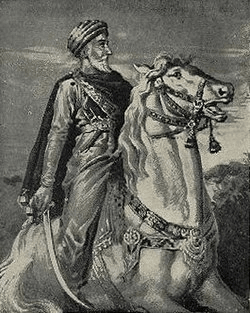
After a few days of sensual delight, they were again drugged, and taken back to the fortress. The Old Man would tell them that he had allowed them a glimpse of the paradise that would be theirs for-ever if they died for him. This, said Polo, was why there was no shortage of volunteers. They were so eager to die, and become part of the life eternal, that the Old Man would sometimes order them to jump out of high windows, just to impress visitors.
Hasan Ibn-al-Sabbah’s aim was power: to make himself master of the Moslem world, and its religious leader. If he was to achieve this, he had to conquer the Turks, who ruled most of the Middle East, and who supported the orthodox Moslems. But how could a religious leader, with only a few hundred followers, conquer a great nation? Hasan had his answer: murder - carefully planned political murder. He reasoned that the best way to win a war is to slay your enemy’s leader.
To begin with, his plan succeeded brilliantly. Nizam-al-Mulk’s son, Fakhri, swore revenge. One day, in the street of Naishapur, he was accosted by an old beggar, who moaned: “The true Moslems are no more and there is none left to take the hand of the afflicted”. Touched, Fakhri reached into his robe for money, and was stabbed to the heart.
Enraged. Nizam’s other son, Ahmed, set out to avenge his father and brother. His army besieged the castle of the Old Man, and discovered, to its cost, that it was impregnable. Not long after he had abandoned the siege, Ahmed was also stabbed by an Assassin. He was luckier than hit father and brother, and eventually recovered from the wound.
A knife and a note
Another Sheik who set out to fight the Old Man woke up one morning to find a knife embedded in the ground near his pillow, and a note: “This knife could just as easily have been in your heart.” That convinced him; he made a truce with the Old Man instead.
Oddly enough, it was Hasan’s very efficiency in the art of murder that finally defeated him. When people thought of the Old Man of the Mountain, they shuddered; he seemed like a poisonous black spider, brooding in his mountain retreat. A really successful leader needs friends and allies; Hasan-ibn-al-Sabbah mainly inspired horror. When he died, still in his lair, at the age of 90, he was an embittered old man, who had achieved none of his great ambitions.
The Order of Assassins survived his death for another hundred years, and there were more Old Men of the Mountain. But their day was over, and they were finally stamped out by their enemies. The breakaway sect called the Ismailis still exists today. Its leader is called the Aga Khan, and in sporting circles he is perhaps better known as the owner of race horses.
Although the Assassins disappeared, there is a curious possibility, which has never been investigated by historians, that they may only have moved elsewhere. When the British became masters of India, in the mid-eighteenth century, they noticed that the roads were infested with brigands, and that hundreds of people disappeared each year.
At the time they didn’t attach much significance to this fact. Then, in 1812 a young British doctor named Robert Sherwood, stationed with the army in Madras, suddenly entertained a horrible suspicion: that all the disappearances were not just casual murders by bandits, but carefully planned religious sacrifices.
He questioned some of the “robbers” who had been caught, and induced them to talk to him frankly. They admitted that they belonged to a sect called the the "Thuggee" or "Thugs” (pronounced “Tugs”), and that for one month a year, they took to the roads, and murdered countless travellers.
Strangling noose
Their method was almost foolproof. Looking like harmless travellers, sometimes religious pilgrims, they would find a party of wayfarers and ask if they could join them. As the days went by, more Thugs would join the band, until Thugs outnumbered the genuine travellers. At a given signal, a Thug would attack each traveller from behind, throwing a strangling noose around his neck, while another Thug tripped him and held him down.
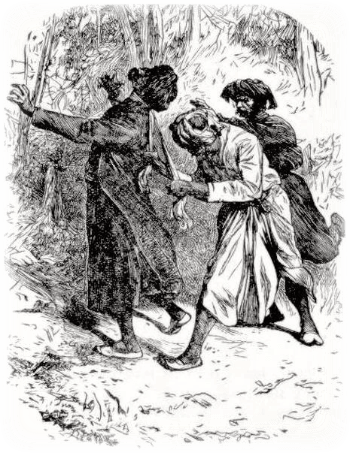
The British were horrified by these revelations; this was carrying a religion too far. William Sleeman was appointed to stamp out Thuggee, and he succeeded so well that by 1850, more than 4000 Thugs had been tried, and most of them executed. Some betrayed other Thugs in exchange for their lives.

There are a few clues. When the Assassins fled from the Middle East towards the end of the thirteenth century, one of the countries they went to was India. India still has an enormous number of Ismailis (although it should be noted that the Assassins were only one single branch of the Ismailis). Sleeman was puzzled that the Thugs worshipped the goddess Kali, a Hindu goddess, for they were not Hindus, but Moslems.
One captured Thug told Sleeman that Kali was another name for Fatima, the daughter of Mahomet. And Fatima was the head of a breakaway sect that later became the Ismailis . . . Altogether, it seems possible that the Thugs were the descendants of the Assassins of the Old Man of the Mountain.
The word “assassin” was derived from “hashishim”, a taker of hashish (or pot). This was how the Europeans explained to themselves the frightening self-sacrifice of Hasan’s Ismailis. Gradually, the word passed into most languages. (In France, an assassin simply means a murderer.) In Europe, assassination lost its religious overtones, and became purely political. But since most Europeans lack the fanatical temperament, it remained relatively rare.
Two notable assassinations were those of Henry III of France, who was stabbed to death in 1589 by a Dominican Friar who disliked the king’s Protestant sympathies, and the French King Henry IV, murdered in 1610 by a Catholic fanatic who thought he intended to make war on the Pope.
An insane grudge
Then came the Age of Reason; religious fervour cooled. There were still occasional attempts on the lives of kings and leading statesmen, but they were usually made by cranks, or men with an insane grudge. In 1757, an idiot called Robert Francois Damiens made a halfhearted attempt to murder Louis XV of France with a blunt knife, and was horribly executed, torn into four quarters while still alive by four horses. But less than a century later, the world had become more humane.
When a lunatic named Daniel McNaghten shot and killed the secretary of the Prime Minister of England, he was recognized as insane, and confined in an asylum. That was in 1843, and the result was the famous McNaghten rules, which saved many murderers from the gallows.
Yet, strangely enough, the great second age of assassination was now about to begin. It was signalled by the shot that rang out in a box at Ford’s Theatre, in Washington, on the evening of April 14, 1865. Abraham Lincoln fell forward, shot in the back of the head. His assassin, John Wilkes Booth, leapt on to the stage. But he was wearing spurs, and one of them caught in the curtain; he fell fourteen feet, breaking his shin. It was the beginning of the bad luck that lasted until he was killed, 12 days later, in a barn in Virginia. The sergeant who shot him said he had orders from the Almighty.
In December 1870, as Juan Prim, the Prime Minister of Spain, was leaving the government chamber in Madrid he was shot down by an unknown assassin. Prim was a liberal who was hated by the reactionary Right wingers. The murderer was never caught, one of the very few assassinations in which the killer escaped. But in the rest of Europe, it was not the Liberals who were becoming the target for assassins: it was the Establishment, the very notion of law and order.
The ideas of socialists such as the French social reformer Charles Fourier, Pierre Joseph Proudhon, and the German Karl Marx, had taken root. Men like Prince Peter Kropotkin and Enrico Malatesta were preaching an even more sinister doctrine called Anarchism, the belief that all men are naturally good, and that if only we could get rid of all authority, society would become a kind of Garden of Eden.
The strange thing was that these kindly idealists should become identified with slaughter and violence. The politician and economist Proudhon invented the word Anarchy, meaning “No government”. He would have been amazed if someone had told him that it would soon arouse as much horror as the word Assassin had eight centuries earlier.
The thunder of anarchist bombs began in 1879. The Czar of Russia, Alexander II, had survived several attempts on his life by bullets; on one occasion, the pistol blew up and shattered the would-be assassin’s arm. Then a terrorist called Zhelyabov swore he would blow the Czar sky-high. He planted an immense charge of nitroglycerine on a railway line, so the explosion would blast the Czar’s train into a ravine. It was a spectacular idea, but it failed when a passing cart cut the wire.
His next attempt was successful, but the Czar wasn’t on the train. In February 1880, anarchists succeeded in planting a charge of dynamite in the dining-room chimney of the Czar’s Winter Palace, timed to go off as he ate his supper. A guest was late and the Czar delayed going into the room, which was demolished by the blast.
Home-made bombs
But Alexander’s luck was beginning to run out. On March 1, 1881, he had been inspecting his troops, and was returning by carriage. Anarchists with home-made bombs, nitroglycerine in glass balls, were stationed along several possible routes in St Petersburgh. The Czar may have been feeling slightly more secure than usual, because Zhelyabov had been arrested the day before.
Suddenly, there was an explosion behind the carriage, shattering its door, and wounding a Cossack and a boy. The Czar made the mistake of getting out to offer his sympathies. Another anarchist threw a bomb, and this time the blast killed the assassin and 20 bystanders, and smashed windows for 180 yards.
The Czar’s legs were mangled, and he died a few hours later in his palace, surrounded by his weeping family. The murder triggered a violent wave of reprisals against all known leftists. Political repression came down like a shutter of lead. In 1887 a student leader named Alexander
Ulyanov was hanged, with four fellow students, for an unsuccessful attempt on the life of Alexander III. His younger brother Vladimir vowed to avenge the death, and 30 years later, he did so. By then he had changed his name to Lenin.
Now the anarchists were inspired by an ideal that amounted to a religion, and for the next quarter of a century, the bombs exploded and the blood flowed.
On May Day 1892 a workers’ demonstration led by anarchists was broken up by mounted police in the Paris suburb of Clichy. Five anarchists were brutally beaten by the police. At their trial, an indignant prosecutor demanded the death penalty, but no one was now that angry or bitter; one defendant was acquitted, the other two given three and five year sentences respectively.
Man with a scar
Six months later, the home of the judge, M. Benoist, was destroyed by a bomb, and two weeks after that, another bomb destroyed the home of the prosecutor who had demanded the death penalty. The police wanted to interview a young man with a scar on his hand. A cafe waiter named Lherot noticed such a mark on the hand of a voluble young customer, and called the police.
It took ten men to subdue the man, who called himself Ravachol. He proudly admitted the bombings, saying that his aim had been to avenge the Clichy anarchists. For a while, he was an anarchist hero, until the police discovered he had committed several murders in the course of robbery.
The police declared he was a common criminal, and the anarchists were inclined to agree. Just before his trial opened, another bomb exploded in the restaurant where he had been arrested, killing the proprietor.
When the trial opened, the Palais de Justice was surrounded by troops, anticipating more anarchist outrages. Ravachol was sentenced to death, so inciting further violence. “I know I shall be revenged,” he said, and died shouting "Long live Anarchy!”
Four months later, a bomb was planted in the Paris office of a mining company who were engaged in a struggle with strikers. It was discovered, and a policeman carried it off to his police station, where it exploded, killing six men.
In March 1893, a workman named August Vaillant, whose family was starving, manufactured a bomb out of a saucepan, gunpowder and nails, and hurled it in the Chamber of Deputies. It was intended to be a protest, not to kill anyone. Only a few deputies were scratched with nails, but the government was now thoroughly alarmed, and Vaillant was speedily executed.
The anarchist cause had another martyr. A week later, a bomb exploded in a boulevard cafe, killing one man and wounding twenty. And bombs went off in other parts of Paris, four explosions in a few weeks. One of them killed the anarchist who was carrying the bomb, and he proved to be responsible for two of the explosions.
In another explosion, a writer named Laurent Tailhade lost an eye. He had made headlines some time before when asked his opinion of the Vaillant explosion; he had replied grandly: “What do the victims matter if it’s a fine gesture?"
Now he knew.
The avenger strikes
An anarchist named Emile Henry was arrested for the cafe explosion, and explained proudly that he had intended to kill as many of the “bourgeois” middle-class citizens who could afford to drink in cafes, as possible.
Henry was executed in May 1874. And the following month, as President Sadi-Carnot was driving through Lyon in his carriage, a young man stepped forward holding a bunch of flowers. The police let him approach. He drew a knife, and stabbed Sadi-Carnot to the heart.
The day after the murder of Sadi- Carnot, his widow received a letter, posted before the attack, containing a photograph of Ravachol, with the words: “He is avenged.”
France was not the only country that resounded to the crash of anarchist bombs and pistols. In May 1885, police charged into Haymarket Square in Chicago to break up a demonstration of strikers.
Someone hurled a bomb into the police ranks, killing seven officers.
As a result of this, eight anarchists were arrested arbitrarily and sentenced to death. One managed to blow himself up on the night before his execution; three were pardoned; the other four were hanged.
With so many people dying in want, or slaving for starvation wages, the United States was ideal soil for an anarchist movement. In June, 1892, there was a strike of steelworkers at Homestead, Pennsylvania, when strikers attacked and killed “blacklegs”, and the Governor sent in the militia to repress them.
A young Russian anarchist named Alexander Berkman managed to bluff his way into the office of the steelworks. There he drew a pistol, and shot the manager. Henry Clay Frick, twice, then stabbed him seven times. Miraculously, Frick survived; Berkman was sentenced to 16 years in gaol, and the United States broke into an uproar of condemnation or support for Berkman. As propaganda for anarchism, Berkman’s act was totally successful.
Eight years later, in 1900, an Italian- American weaver called Gaetano Bresci sailed from Paterson, New Jersey, intending to assassinate King Humbert I of Italy. He succeeded on July 29, shooting the king as he was distributing prizes at Monza, near Milan. In the United States, a Polish-American named Leon Czolgosz was fascinated by the newspaper account of the killing, and decided to earn himself a similar fame.
Since Lincoln’s death, another American President had fallen at the hands of a killer. In 1881. President Garfield had been shot by a vain little coxcomb of a man, Charles Guiteau, who was suffering from delusions; Guiteau was executed, having gained the notoriety he craved.
Czolgosz also bought a revolver, and on September 6 1901 joined a queue of people waiting to shake hands with President William McKinley, who was visiting the Pan-American Exposition in Buffalo. As the President held out his hand, Czolgosz shot him in the chest and abdomen.
At his trial. Czolgosz refused to speak to anyone; he was the first assassin to die by electrocution. After his death, sulphuric acid was poured into his coffin to destroy the body.
In Russia, the bombs and pistols continued to explode, killing government ministers, chiefs of police, even the prime minister, Stolypin. In Serbia, King Alexander I and Queen Draga were slaughtered in their palace in Belgrade by army officers on June 10, 1903. And on February 1, 1908, the unpopular King Carlos I of Portugal was shot down, together with his son, Crown Prince Luis, in the corner of the Praga in Lisbon by revolutionaries.
Archduke murdered
But the shot that put an end to revolutionary slaughter exploded on Sunday, June 28, 1914. It killed Archduke Franz Ferdinand of Austria as he drove in his carriage in Sarajevo, in Serbia. It was fired by Gavrilo Princip. A second shot killed the Archduchess.
In a sense. Princip achieved more than any other revolutionary. His two shots brought about World War I. and the Russian Revolution of 1917. After more than a quarter of a century of bullets, bombs and blood, the anarchists had achieved their aim and the second great age of assassination was over.
ASSASSINATION CASE - LEON TROTSKY
He helped to create Soviet Communism, and then lost out to Stalin, who made him a fugitive from a violent vengeance that knew no frontiers!
The exiled Russian leader was busy in the garden of his Mexican villa, feeding his pet rabbits. He turned as he heard footsteps approaching, and his face, with the familiar high-domed forehead, bespectacled blue eyes, and goatee beard, broke into a smile of welcome.
His visitor was expected. He was a young Canadian, Frank Jacson, accepted at the house on the Avenue Vienna because he was the lover of one of Trotsky’s most devoted disciples - Sylvia Agelof. Three days earlier, Trotsky had suggested some improvements to a political article Jacson had written. Now he had returned to show him the changes.
They were joined at the rabbit hutches by Trotsky’s wife, Natalya. She noticed that, although it was a warm and sunny August afternoon, Jacson wore a hat and carried a raincoat over one arm. She asked him why. “This weather won’t last,” Jacson shrugged. “It might rain.” He looked pale and preoccupied. Trotsky suggested he and Sylvia might join them for supper. “No,” said Natalya. “He is feeling so ill he will not even stay for tea.”
Trotsky had seemed reluctant to go indoors and take a second look at Jacson’s manuscript. But now, hearing of his ill-health, he closed up the hutches and dusted down his blue French peasant’s working suit. “Come,” he said. “Let us go inside.”
They entered Trotsky’s study and closed the French windows behind them. Natalya made her way to the kitchen. Then, suddenly, the peace of the August afternoon was shattered by a piercing scream, followed by the sound of breaking furniture and objects being hurled.
Natalya rushed to the study. Trotsky stood between the door and French windows, his face red with blood, his spectacles missing. She hurried across and took him in her arms. “Jacson,” he said, and fell to the floor.
Foiled by a scream
While Trotsky read his manuscript, Jacson had drawn a piolet; an ice pick with a handle a foot long and an iron head, one end pointed, the other like a hammer, from the recesses of his raincoat and brought it down on the Russian’s head with all his force.
From the angle at which it struck, it seemed that Trotsky must have turned towards his assailant just as the blow was struck. The ice pick had penetrated his skull to a depth of two-and-a-quarter inches. Another quarter-of-an-inch and he would have died instantly, giving Jacson a chance to make his getaway in one of two cars parked in nearby streets.
That part of the plan was foiled by Trotsky’s scream. Two of his bodyguards cornered Jacson in the study. They tore from his grasp a gun, which, like the ice pick, he had carried in his raincoat, and started to beat him to death. Meantime, Natalya had managed to get Trotsky into the garden where she laid him down on the grass with a pillow under his head. She kissed him. “Natalya, I love you.” he whispered, then added: “Don’t let them kill him. He must talk.”
At the hospital there was not much the doctors could do for Trotsky. The ice pick had caused enormous damage to his brain. One of his arms was paralyzed; the other kept describing circles in the air. Nevertheless, as he was made ready for a brain operation, he dictated his last political statement to one of his henchmen.
“I am close to death from the blow of a political assassin. I was struck down in my room. I struggled with him. We had entered, talked about French statistics. He struck me. Please say to our friends I am sure of victory of the Fourth International. Go forward!”
Trotsky, approaching his 61st birthday, lived for 24 hours after the operation but never recovered consciousness. By mid-day next day there seemed some improvement in his condition. By evening, however, the pace of his breathing grew more and more feverish. Natalya, who had remained at his side the entire time, took him in her arms and tried to raise his head. It drooped on her shoulder. His breathing stopped. He was dead.
The date was August 21, 1940. But far more surprising than the fact that Trotsky should have died at the hand of a political assassin, was that it took so long for it to happen. For he had made an unappeasable foe of one of the most powerful and ruthless men in the world, a man who once said: “To choose the victim, carefully prepare the blow, satisfy an implacable vengeance, then go to bed. There is nothing sweeter in the world.” That man was Josef Stalin.
Their quarrel had its roots in the earliest days of the Russian Revolution of 1917. Trotsky played a far greater role than Stalin in overthrowing the Czarist regime and replacing it by the world’s first Communist state. He was the right-hand man of Lenin, the “Father of the Revolution”.
He also created the new Red Army, which triumphed in the 1918-20 civil war in Russia, and he was, in many ways, responsible for the ultimate Communist victory.
Stalin, however, outmanoeuvred Trotsky in the battle for succession which followed Lenin’s death in 1924. Then, having secured his own position, he set out on a deliberate campaign to destroy Trotsky and his disciples.
World revolution
Trotsky commanded by far the greater prestige, both inside and outside Russia, but Stalin controlled the Communist Party machine, and that proved to be decisive. In 1926 Trotsky was ejected from the Politburo, and the following year he was expelled from the Party altogether and exiled to Central Asia.
Over and above personal differences, the two men were now separated by a fundamental ideological dispute. The opportunist Stalin was content to consolidate the Revolution, and his own position, inside the Soviet Union. The idealistic Trotsky, however, would accept nothing less than Communist Revolution throughout the world.
Trotsky was no coward. While in exile in Central Asia, he wrote a violent attack on Stalin called The True Situation in Russia, and had it smuggled out to Germany where it was published. A furious Stalin, not sufficiently sure of himself to liquidate Trotsky altogether, took what seemed the next best course. He expelled him from the Soviet Union.
It was not easy for Trotsky to find a new home. Nobody was keen to give sanctuary to a man dedicated to the political cause of world revolution. For a time he settled on an island off Constantinople. From there he moved to France. In 1935 the French government asked him to move on after Stalin had accused him of complicity in a political murder. He made a new home in Norway, but, in 1936 the Norwegian government agreed to a Soviet request to expel him from their country.
Thus he came to Mexico, where President Lazaro Cardenas had agreed to grant him political asylum. The intervening years had done nothing to diminish the hostility between him and Stalin. In 1935 Stalin began the Moscow show trials at which leading Bolsheviks confessed to having betrayed and sabotaged Communism under orders from Trotsky. Mass executions followed.
The purges continued with more show trials in 1937 and 1938. Trotsky himself, in his absence, was sentenced to death as a traitor. The Russian newspapers constantly attacked him. Economic disasters such as failure of the wheat crop and outbreaks of swine fever were laid at his door. He was even blamed for the failure of trains in the Soviet Union to run on time.
For his part, Trotsky sniped at Stalin with the written or spoken word at every opportunity. “The cancer that must be burned out of the labour movement with a hot iron”, was one of his descriptions of the Soviet leader. Then, in 1938, he expanded his opposition to Stalin by calling a conference in Paris to found the Fourth International, an organization of workers to stand for Socialist principles.
And it was there that Stalin set in motion the plan designed to silence his old enemy forever. One of the interpreters at the conference was Sylvia Agelof, born in New York but of Russian descent. While in Paris she met, fell in love with, and was seduced by a handsome young Belgian sports journalist named Jacques Mornard.
Handpicked killer
As they wined and dined in cosy restaurants and walked hand-in-hand by the Seine, it seemed to Sylvia to be one of those romantic encounters for which Paris is celebrated. But Monard had a more sinister motive in starting his affair with her. He was a killer, handpicked and trained by the Soviet secret police for the special task of assassinating Trotsky.
It was the spring of 1940 before he turned up in Mexico City, equipped with a Canadian passport and travelling under the name of Frank Jacson. “The reason is simple,” he explained to Sylvia, who journeyed down from New York to resume their romance. “Now that war has broken out in Europe, I am trying to escape the call-up.”
Meanwhile, Trotsky went in daily fear for his life. “Another day, Natalya, by courtesy of Stalin,” was how he usually greeted his wife each morning. At the villa in Coyoacan, on the outskirts of Mexico City, he was normally surrounded by five or six armed bodyguards, usually young Americans with strong left-wing tendencies who had come down to Mexico to sit at the feet of the master for a few weeks.
A machine gun had been set up in the villa’s tower; outside, a second bodyguard of ten policemen kept watch around the clock on the direct orders of President Cardenas.
Despite the climate of suspicion, no one gave a second thought to Jacson. Politically, he seemed a lightweight, but he was the lover of Sylvia, and who could be more loyal than Sylvia? He became a regular visitor, and occasional supper guest, at the Trotsky’s’ villa on the Avenue Vienna.
The first attempt on Trotsky’s life came on May 24. A gang obtained entry to the house after overpowering the police guard and poured a fusilade of several hundred machine gun bullets into Trotsky’s bedroom before making a successful escape. Miraculously, both Trotsky and his wife, who had sought refuge on the floor with the bed between them and the door, escaped without injury.
Body in quicklime
One of Trotsky’s secretary-bodyguards, a young American named Robert Sheldon Harte, was found to be missing after the raid. His body was later discovered buried in quicklime at a remote farmhouse which the raiders had used as a hideout. Witnesses reported that they had seen Harte go off with the gang quite willingly, and it was popularly believed that he was an accomplice who had admitted the armed raiders to the villa.
Trotsky, however, refused to credit that Harte had betrayed him, and had a plaque put up in the grounds saying: “In memory of Robert Sheldon Harte, 1915-1940, murdered by Stalin.”
Police inquiries subsequently established that the assassination attempt had been carried out by a gang of Mexican- Stalinists and ex-Spanish Civil War veterans, led by David Alfaro Siqueiros. Siqueiros, who was a distinguished artist as well as the effective figurehead of the Mexican Communist Party and a former colonel in the Spanish Republican Army, believed the Stalin line that Trotsky had “betrayed the Revolution”.
Much later still, when Trotsky was in his grave and his killer in jail awaiting trial, evidence was found which linked Jacson with the events of May 24.
At the time he was staying at a holiday camp in the centre of Mexico City which catered for rich visiting Americans. On the night of May 23-24, the proprietor recalled, some men borrowed Jacson’s car and took away a trunk and two suitcases which he had been storing at the holiday camp office. It seems probable that the luggage contained the machine guns used in the attack.
Used love affair
Evidence also came to light that Jacson had meetings with Harte in Mexico City. This would provide a motive for the elimination of Harte, for it was only after the unsuccessful assassination attempt on May 24 that Jacson made use of his love affair with Sylvia Agelof to infiltrate the villa and make the personal acquaintance of Trotsky.
But none of this was known in the weeks between May 24 and August 20. Jacson was free to come and go, and, in the end, succeed with an ice pick where machine guns had failed.
Within hours of Trotsky’s death, Jacson and Sylvia Agelof were brought face to face at the hospital. Police could not believe that, after being his mistress for so long, she was not also his accomplice. On seeing him, however, she screamed: "Kill him! Kill him!”
Colonel Salazar, the police chief in charge of the investigation, explained that Jacson claimed one of his reasons for killing Trotsky was the fact that he had spoken disparagingly of Sylvia, the woman he loved.
“Nothing but lies, lies,” she sobbed.
Jacson pleaded: “Take me away.” “What do you think of him?” the Colonel asked. Sylvia replied by spitting in Jacson’s face.
He was not brought to trial until the spring of 1942, by which time he had been questioned for a total of 900 hours by psychiatrists charged with preparing a personality report for the judge, and he was not sentenced until another year had passed.
Then, on April 17 1943, he was jailed for 19 years and six months for premeditated murder and a further six months for illegal possession of arms.
By this time, one thing was quite clear; nobody knew who he really was. Both the identities he claimed, as Jacques Mornard - a Belgian, and Frank Jacson, a Canadian, broke down under investigation. The mystery was not solved until 1950 when Dr. Alfonso Quiroz, one of the psychiatrists who had established, contrary to Jacson’s denials, that he was a fluent Spanish speaker, took a set of his fingerprints to Spain.
A check with police headquarters in Madrid showed they matched the prints of a young assistant chef named Ramon Mercader, who had been arrested in June 1935, during a routine roundup of young Communists in Barcelona.
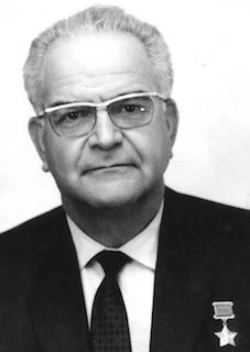
He was the son of a Cuban mother, Caridad, who bequeathed him her own burning faith in Communism. Together they had both fought on the Republican side in the Spanish Civil War. In 1937 Mercader disappeared, to spend a year in Moscow at a school for spies and saboteurs. He reappeared in Paris in 1938, as Jacques Mornard, the man with the mission to kill Trotsky.
In Juarez Penitentiary in Mexico City, where he was still known as Mornard, Mercader never talked. He was, however, a model and popular prisoner. He took up painting and radio TV repair work. He studied electrical engineering, becoming so expert that he was put in charge of the whole of the prison’s electrical system.
The campaign against illiteracy also became one of his enthusiasms and, in his spare time, he taught several hundred of his fellow prisoners to read and write.
Money was no problem for Mercader in prison. Regularly each month a cheque for £125 arrived from an unknown source. Under the easygoing rules of life in a Mexican jail, Mercader was able to have his own food sent in. He also received visits from women, with whom he spent a few intimate hours alone each week in the penitentiary’s “guest house”.
In 1953, when he had served two-thirds of his sentence, the question of parole came up. Dr. Quiroz opposed the parole because, he said, “Mornard believes that he achieved a high moral purpose by murdering. He believes that he remained a moral man after having assassinated.
“He does not feel any repentance for the crime. He believes that the death of Trotsky was of benefit to the working class. He does not consider himself an assassin, or a magnicide, or as morally insane, or abnormal...”
Another psychiatrist put forward the view that Mornard, who had refused to admit the Mercader fingerprints were his own, was socially dangerous only to the extent that all Communists were socially dangerous. Not to release him would be to suggest that a large number of dedicated politicians should be kept permanently under lock and key.
The court refused Mercader parole on the grounds that he had “not expressed any moral regrets for having committed the crime”, and that he was “proud of his status as an enigmatic man”. A higher court upheld the decision on appeal, adding that it “Was difficult to parole a man if nobody knew officially who he was.”
So Mercader served nearly the whole of his sentence. He was not released until May 6, 1960. By then, under the influence of the easy life he had led in prison, the handsome, slim young “Belgian journalist” who had seduced Sylvia Agelof in Paris more than 20 years before had grown to resemble a Soviet caricature of the typical capitalist, fat, paunchy, ugly.
Quickly, and without giving a statement, he caught a plane to Castro’s Cuba. From there, under yet another name, Jaime Hernandez, a Spaniard travelling with a Czech passport, he sailed for Russia, escorted by two Czech secret policemen, aboard a tanker. Said Trotsky’s widow on hearing the news: “He is either going to his reward or his elimination.”
Order of Lenin
As it turned out, it was to his reward. In Moscow he joined his mother, who had received the Order of Lenin from Stalin, plus the Order of a Hero of the Soviet Union to keep for her son. Then he moved on to Prague to take up a job as a radio and TV mechanic.
With him was one of the girl friends who used to visit him in prison. At the end of the 1960’s, when he granted an interview to a journalist, he refused, despite offers of large sums of money, to say anything about his life prior to the death of Trotsky. Asked to admit, at least, that he was Mercader, he replied simply: “I killed Trotsky.”
At the time of the murder, Pravda, the official Soviet newspaper, recorded Trotsky’s death in nine bleak lines, and the Soviet authorities immediately set about erasing his name from their history books. But, since Kruschev’s subsequent denunciation of Stalin and his personality cult, Trotsky is no longer looked upon inside the Soviet Union as a traitor and enemy of the people.
Even schoolchildren are allowed to know the truth, that Trotsky was one of the Founders of the Revolution who lost out to Stalin in the callous battle for ultimate power.

Blog written by Guy Hadleigh, author of Crimes That Time Forgot, the Macabre True Crimes & Mysteries Series, the Murder and Mayhem Series, the British Killers Series, the Infamous True Crimes and Trials Series - and many more!