5 MACABRE TRUE CRIME CASES YOU'VE PROBABLY NEVER HEARD OF
TOTALLY FREE
Click on the image below to get access
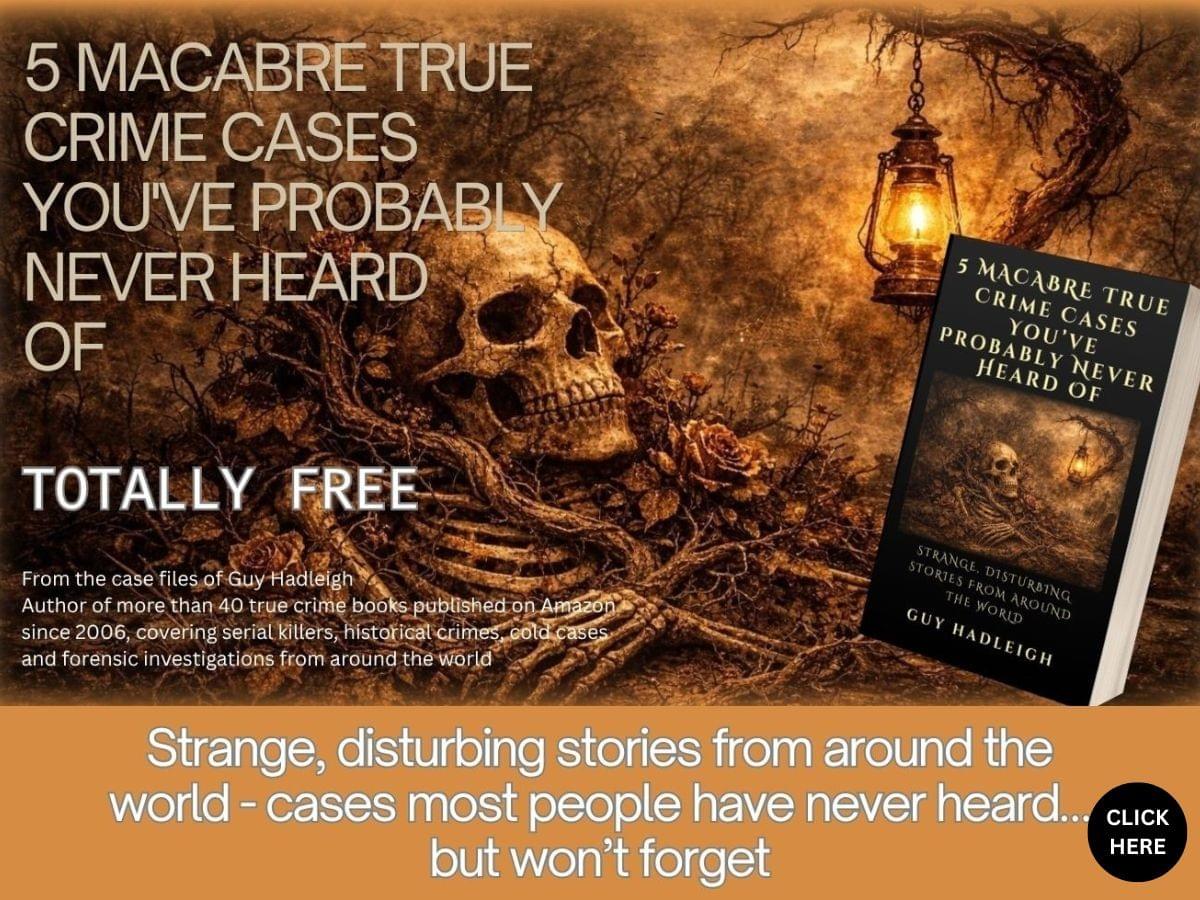
These aren’t the cases you’ve heard a hundred times before.
No famous names (well, maybe some)
No predictable stories.
Inside this collection, you’ll find:
• A killer hiding bodies in iron boxes in Siam
• A group who fled into the freezing dark - and never returned
• Two Ukraine teenagers who murdered 21 people at random - and videoed their crimes
• And more strange, unsettling true crime stories from around the world
📘 WHAT YOU’LL GET
✔ 5 bizarre, lesser-known true crime cases
✔ Fast-paced, gripping storytelling
✔ Real cases from different countries
✔ Stories designed to shock, disturb, and stay with you
If you enjoy these stories, you can explore the full collections here:
👉MACABRE TRUE CRIMES & MYSTERIES SERIES PAGE
Each volume contains 20 bizarre and macabre true crime cases from 20 different countries
BOX SET BARGAINS
Build your collection
Grab a 3-book set from just $6.99, (three books for the price of two), or get the
British Killers 6 books bundle for $9.99 (three free books)
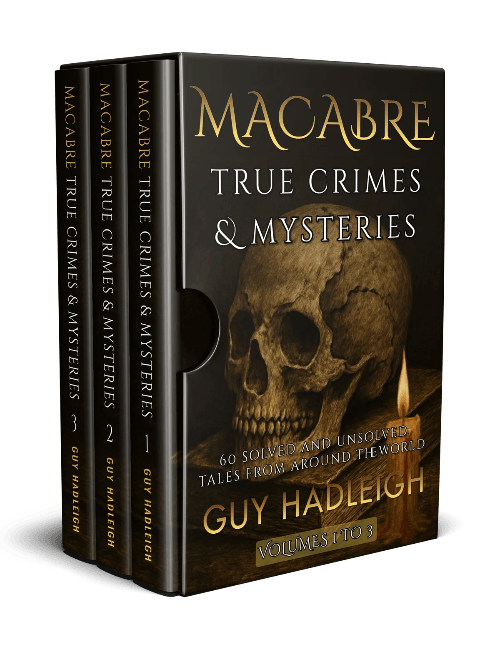
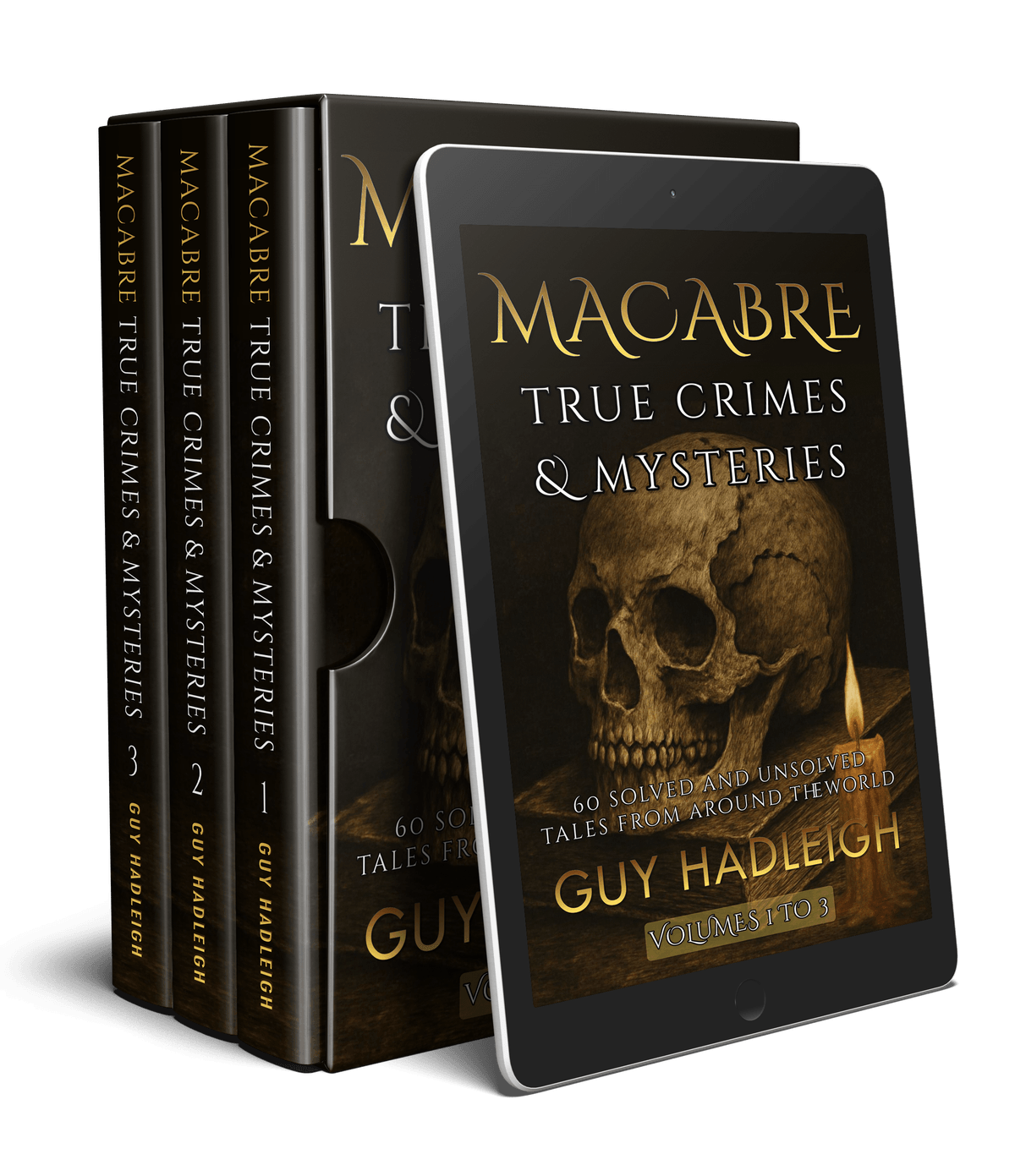
MACABRE TRUE CRIMES & MYSTERIES
60 Solved and Unsolved Tales From Around The World
Volumes 1 to 3

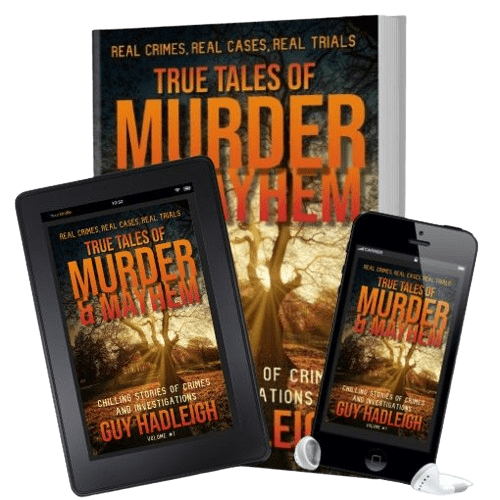
TRUE TALES OF MURDER & MAYHEM
Chilling Stories of Crimes and Investigations
Volumes 1 to 3
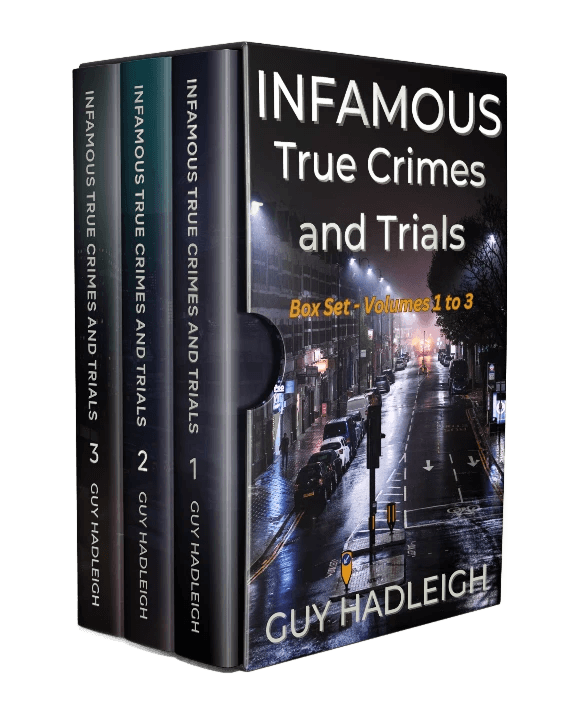
INFAMOUS TRUE CRIMES & TRIALS
Box Set
Volumes 1 to 3
BRITISH KILLERS
54 horrific true crime stories from the UK …and how they were solved
Volumes 1 to 6

NEARLY FORGOTTEN
TRUE CRIMES
27 Infamous True Crimes Revisited
Volumes 1 to 3
MACABRE TRUE CRIMES & MYSTERIES
BOX SET
VOLUMES 1 - 3
60 SOLVED AND UNSOLVED TALES FROM AROUND THE WORLD
From human stew to hammer murders, these are the crimes nightmares are made of..!
Why read fiction ghost stories when history drips with true tales of cannibals, assassins and ritual killers?
Available now on Amazon
📱Digital: $6.99
🎧Audio: $14.99
Have questions? Visit the Ask Guy page for more about the stories and series
MACABRE TRUE CRIMES & MYSTERIES
20 SOLVED AND UNSOLVED TALES FROM AROUND THE WORLD
Volume 1
Click on image for more details

A gripping collection of 20 chilling cases from around the world. From infamous serial killers and bizarre cult murders to unsolved mysteries, twisted folklore, and historic crime cases, this book uncovers real stories more disturbing than fiction. Venture through the haunted alleys of Cape Town, traverse the icy wilderness of Russia, and travel the riverbanks of London. Each story is crafted for fans of true crime, murder mystery nonfiction, and real-life criminal investigations that defy belief. Whether you're drawn to unsolved crime stories, curious about international crimes and mysteries, or fascinated by the psychology of killers and cult leaders, this book delivers spine-tingling accounts that stay with you long after the final page. Perfect for lovers of dark crime history and true crime books.
Available now on Amazon 📱Digital: $3.99 🎧Audio: $9.99
MACABRE TRUE CRIMES & MYSTERIES
20 SOLVED AND UNSOLVED TALES FROM AROUND THE WORLD
Volume 2
Click on image for more details
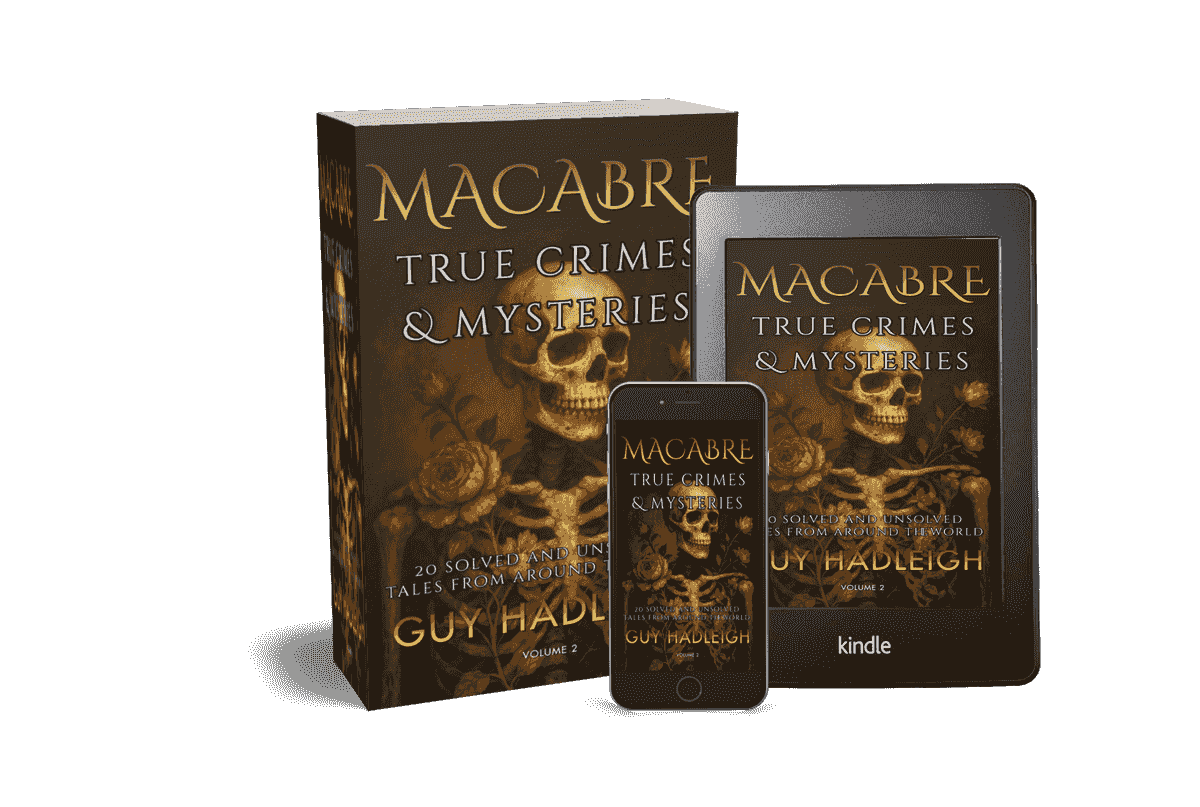
A Haunting Collection of Shocking Real-Life Cases
Grab your copy today and uncover the unsettling truths behind history’s most chilling crimes!
Tiptoe into the shadows of the human psyche with MACABRE True Crimes & Mysteries Volume #2. This gripping book uncovers the darkest corners of true and bizarre crime, featuring some of the world’s most mysterious murders and chilling tales that will leave you spellbound.
Inside, you’ll find serial killer cases that have shocked the world, including the horrifying tale of Luis Alfredo Garavito and his collection of death masks, and the ritual killings of children exposed in ancient Inca culture. With cases spanning across the globe, each story dives into the depths of crime and the macabre.
Perfect for fans of unsolved mysteries and dark crime stories, this book brings you closer to the truth behind the most infamous and disturbing crimes ever committed.
Available now on Amazon 📱Digital: $3.99 🎧Audio: $9.99
MACABRE TRUE CRIMES & MYSTERIES
20 SOLVED AND UNSOLVED TALES FROM AROUND THE WORLD
Volume 3
Click on image for more details
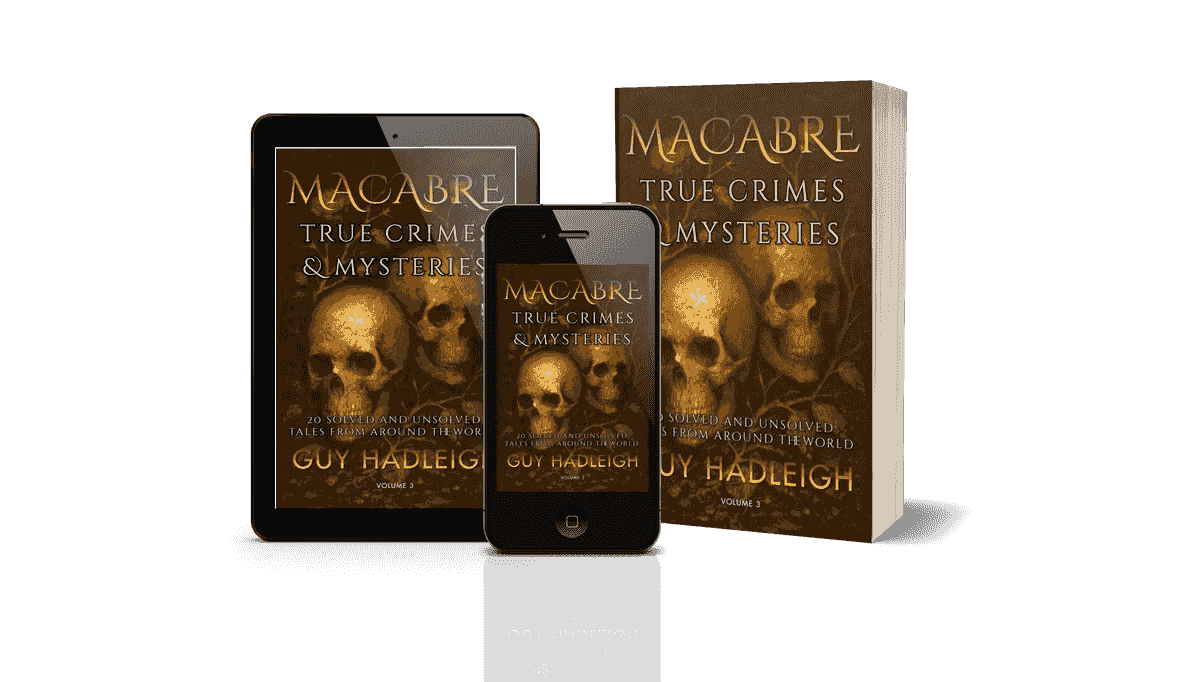
Real-Life Murder Cases, Unsolved Mysteries, and Bizarre Crimes from
Around the World
This gripping collection takes you deep into the shadowy world of murder, mystery, and the macabre — from chilling historical killings to strange, unsolved cases that still baffle investigators today.
Inside, you’ll find real-life cases like The People Eater of San Cristóbal, where police uncover a pot of human stew beneath a Venezuelan bridge; The Infamous Murder of Bridget Cleary, the Irish “fairy” killing that horrified the 19th century; and The Vampire of Czinkota, Béla Kiss, whose preserved corpses and sudden disappearance remain one of Europe’s most haunting cold cases.
Perfect for fans of unsolved mysteries, bizarre crimes, and historical murder cases, this book delivers in-depth storytelling, rich historical detail, and a globe-spanning selection of true crime that will keep you turning the pages. Whether you’re fascinated by infamous killers, strange cultural beliefs that led to deadly acts, or mysteries that defy explanation, Volume #3 offers a chilling journey into the darkest corners of human nature.
Available now on Amazon 📱Digital: $3.99 🎧Audio: $9.99MACABRE TRUE CRIMES & MYSTERIES
20 SOLVED AND UNSOLVED TALES FROM AROUND THE WORLD
Volume 4
Click on image for more details

When reality writes horror stories that fiction can't match—these are the cases that
changed nationsThe Stranglers of India — the Thuggee network hunted by Captain William Sleeman in a relentless campaign that changed criminal justice forever.
The Vampire of Mexico City — how a mild, bookish chemistry student became Mexico’s first serial-killer celebrity.
Aqua Tofana, The Widow-Maker of Rome — the lethal “cosmetic” that created an underground industry of death across 17th-century Italy.
The Butcher of Hanover — a predator who haunted Germany’s Weimar nightmare, and the awful question citizens never dared ask: what exactly were they eating?
Plus 16 more bizarre, brutal, or little-known cases from 20 different countries, each one revealing a hidden slice of the world’s darkest history.
If you love strange historical crimes, immersive storytelling, and cases you’ve never heard of…
The world is full of monsters. Here are the ones history tried to forget.
Available now on Amazon 📱Digital: $3.99 🎧Audio: $9.99
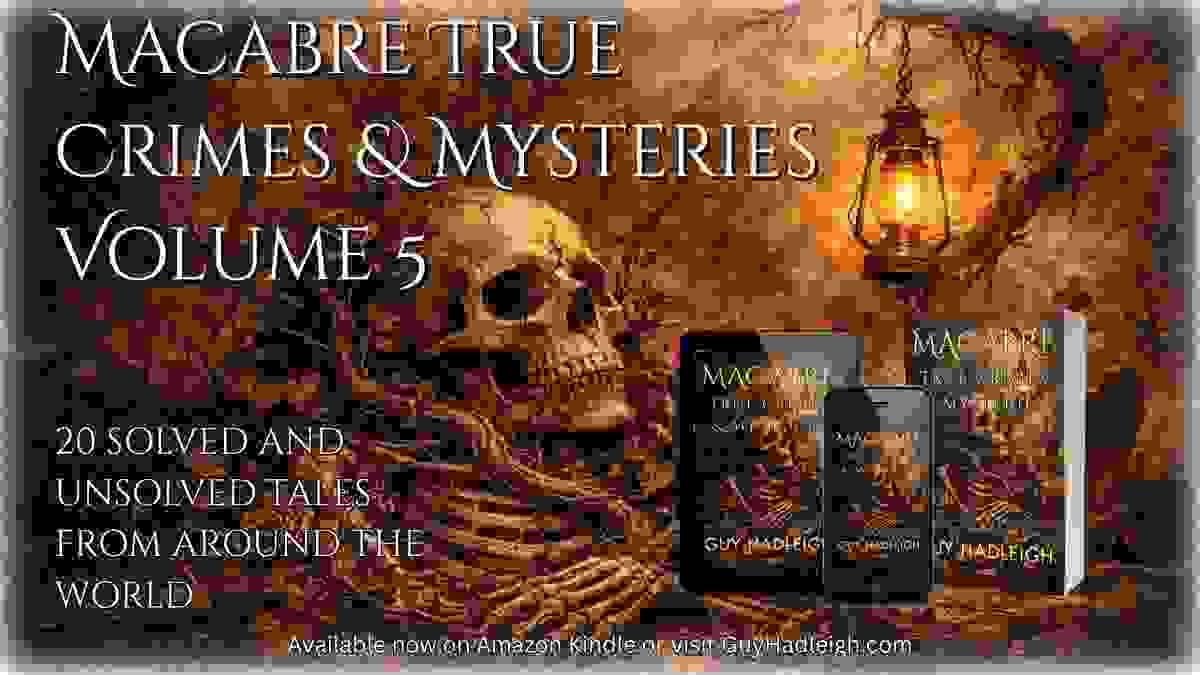
MACABRE TRUE CRIMES & MYSTERIES
20 SOLVED AND UNSOLVED TALES FROM AROUND THE WORLD
Volume 5
Click on button below for more details
And the series continues....
A gripping collection of 20 chilling cases from across the globe. From a massacre in the Zambian bush to a spy assassination captured on Dubai hotel cameras, from a Serbian royal beheaded and his head sent to an Ottoman sultan to the systematic murder of the wealthiest people on earth in the oil fields of Oklahoma — this book uncovers real stories more disturbing than fiction. Venture through the fog of colonial Vietnam, the sunlit promenade of Lake Geneva, and the burning wreckage of a Rhodesian cotton field. Each story is crafted for fans of true crime, murder mystery nonfiction, and real-life criminal investigations that defy belief. Whether you're drawn to unsolved conspiracies, forgotten historical atrocities, or cases where justice was never served, Volume 5 delivers twenty spine-tingling accounts that stay with you long after the final page. Perfect for lovers of dark crime history and true crime books.

SERIAL KILLER MURDER MAP
UK EDITION - BOOK 1
Following in the Footsteps of England's Notorious Serial Killers
Take a chilling journey through the real-life crime scenes of Britain’s most notorious serial killers
- described as they were then, and now.
Blending history, psychology, and a streak of gallows humour, this is no ordinary travel guide.
You’ll visit:
London’s hidden horrors -Christie in Notting Hill, Nilsen in Muswell Hill, Hardy in Camden.
Yorkshire’s killing fields - Sutcliffe’s reign of terror, Neilson’s Black Panther crimes,
Griffiths’ grotesque cannibal boasts.
Manchester’s betrayals - Hardy the brute, Britland the poisoner, Shipman the doctor of death.
The Midlands’ shadows - The Sneinton stranglings and Philip Smith’s canal-side murders.
Available now on Amazon 📱Digital: $3.99 🎧Audio: $9.99

THE INVISIBLE SERIAL KILLER
Steven Wright has been in prison since 2006, convicted of five murders - but in 2026, he confessed to a sixth killing that predated them all by seven years. If Victoria Hall wasn't his first victim, how many others came before her?
Available now on Amazon
📱Digital: $3.99 🎧Audio: $9.99
FLESH, FIRE & CODE
TRUE CRIME CASES FORENSIC INVESTIGATIONS SERIES
BOOK 1
Click on image for more details
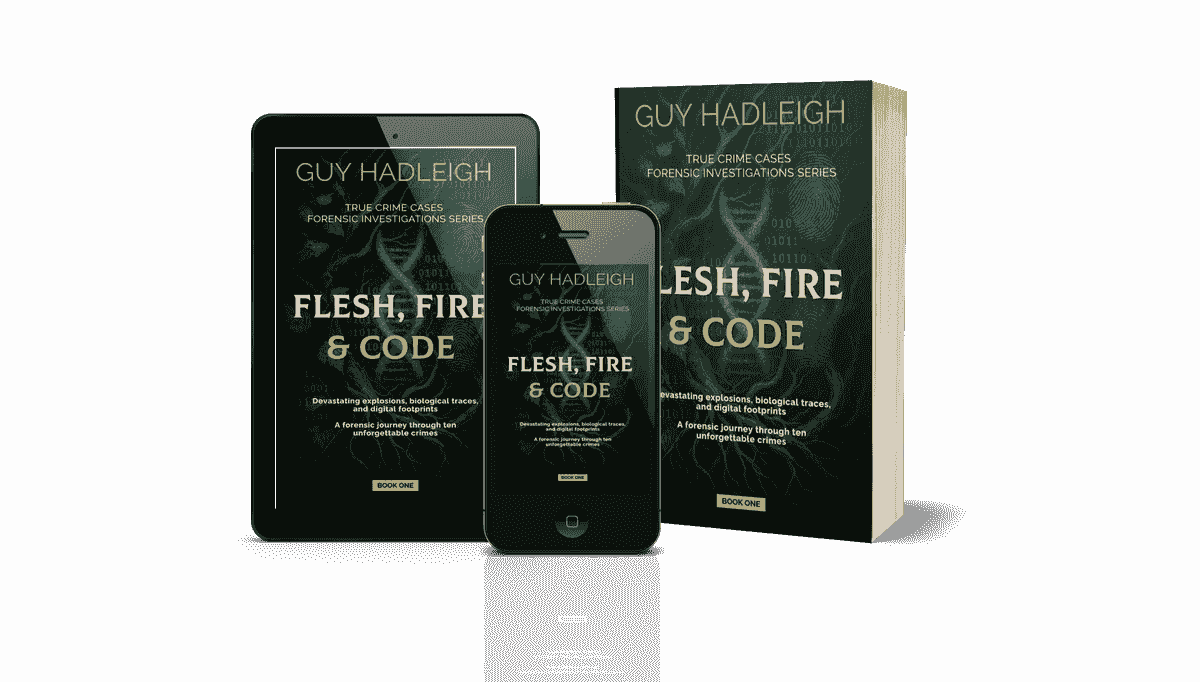
This isn’t your average true crime collection
Flesh, Fire & Code dives deep into real-life forensic investigations—the kind where bloodstains, fire patterns, DNA, and digital footprints are the only witnesses left standing.
Inside, you’ll find ten gripping, fully researched cases, including:
A former cop accused of murdering his entire family—based on eight pinhead-sized blood spots
A nurse entrusted to heal—but whose patients kept dying—until forensic toxicology spoke up
A respected arson investigator with an eerie knack for being first on the scene… every time
A killer caught decades later because a distant cousin uploaded their DNA for ancestry
And a double life revealed by a laptop, a camera, and a Craigslist ad
Based on real events, written for readers who crave forensic science that’s gritty, grounded, and gripping.If you love shows like Forensic Files, enjoy reading about real crime stories, or want your next true crime binge to come with hard evidence—this is for you.
Available now on Amazon 📱Digital: $3.99 🎧Audio: $9.99
'Ndrangheta - The World’s Richest, Deadliest Crime Syndicate
Click on image for more details

This isn't your average mafia story
Blood Feuds, Kidnappings and the Mafia That Rules the Global Cocaine Trade
Inside, you’ll find eight gripping, fully researched chapters, including:
The kidnapping of John Paul Getty III, mutilated to force a ransom from the world’s richest man.
Cesare Casella’s captivity — 743 days chained in the Aspromonte, the longest kidnapping in Italian history.
The Duisburg massacre of 2007, where a Calabrian vendetta spilled into Germany, leaving six men dead outside a pizzeria.
How the clans seized control of Gioia Tauro port, turning it into Europe’s cocaine highway.
And the rise of a global empire — stretching from mountain villages to boardrooms in Toronto, Melbourne, and Zurich.
Available now on Amazon 📱Digital: $3.99 🎧Audio: $9.99
CRIMES THAT TIME FORGOT
History's Most Notorious Cases Revisited - Book One
Click on image for more details

History's Most Notorious Cases Revisited - Book One
Enter the intriguing world of history's most fascinating criminals, where audacious schemes and brazen deceptions collide with justice.
From the charismatic Cassie Chadwick, who convinced America's elite she was Andrew Carnegie's illegitimate daughter, to the desperate stick-up men of the Great Depression.
Journey through tales of infamous impostors, cunning blackmailers, and calculating saboteurs who shaped the criminal landscape.
Discover the tragic story of the Christmas robbery that ended in brutal mob justice, the forty-year mystery of a vanished chorus girl, and the Nazi saboteurs who threatened America from within.
Each tale explores a different facet of criminal ingenuity, from sophisticated confidence schemes to vicious acts of desperation, revealing how ambition, deception, and chance intertwine in the pursuit of ill-gotten gains.
These captivating narratives from the USA and the UK provide an intriguing insight into the minds and actions of those who chose to defy the law and ultimately paid the penalty.
AVAILABLE IN DIGITAL, PAPERBACK AND HARDBACK FROM AMAZON FROM JUST $3.99
Click on image for more details

MURDER & MAYHEM SERIES

TRUE TALES OF MURDER & MAYHEM - Volume #1
Chilling Stories of Crimes and Investigations
MURDEROUS FAMILIES: Unraveling DarknessIn the world of crime, families turning to wicked acts know no bounds, exemplified by the infamous Bender family luring and murdering travelers. The Manson "family" trial for Sharon Tate's murders remains an enduring symbol of brutality.
PARENT KILLERS: Betrayal Within
Parents face the unthinkable as children turn to murder, seen in Lizzie Borden's notorious axe killings and Sidney Fox's deadly choice to dispose of his mother.
VITAL CLUES: Threads of Justice
Criminologists are captivated by vital clues leading to convictions. Explore cases like "The House of the Rising Sun," where a postcard becomes a sole tangible clue, and "Death Wore a Gold Chain," revealing critical evidence for a murder conviction.
FIRERAISERS: Minds of Arson
Psychiatrists delve into the twisted minds of arsonists who find thrill in deliberate fires. Historical cases, like A. A. Rouse's misfired plans and a Manhattan garment factory's negligence leading to tragedy, expose the dark motives behind intentional blazes.
KILLED ON DUTY: Tragedy in Blue
The murder of a police officer triggers horror. Historical cases include PC Gutteridge's tragic end in 1927 and the controversy surrounding Derek Bentley and Christopher Craig's trial, ultimately influencing the abolition of the death penalty.
"True Tales of Murder & Mayhem" explores these dark narratives, venturing into the world of murderous families, the betrayals of parent killers, the unraveling of vital clues, the minds of fireraisers, and the tragic stories of those who fell while upholding the law.

TRUE TALES OF MURDER & MAYHEM - Volume #2
Chilling Stories of Crimes and Investigations
This thrilling anthology chronicles some of history's most shocking crimes of passion and revenge.Step back into the foggy, gaslit streets of 19th century London, where master criminals like Charles Peace stalked their victims under cover of darkness. This notorious violin-playing burglar, and master of disguise, eluded capture for years before his date with the hangman. Also featured is the disturbing case of James Blomfield Rush, whose mass murder in a stately manor shocked Victorian England.
Transport yourself back in time to the scandalous demise of beautiful Starr Faithful, a New York party girl whose dangerous obsession with sailors led to her perplexing end. Contrast her story with that of the homely housewife Charlotte Bryant, whose surprising success with men ultimately brought her to the gallows.
Relive the chilling assassination of Leon Trotsky, murdered in exile by a political zealot. Learn the bizarre truth behind the death of President Garfield at the hands of a religious fanatic.
Sail the high seas with the notorious Captain Kidd, Scottish buccaneer whose buried treasure is still sought today. Meet Anne Bonny, the bold and alluring "Empress of the Spanish Main," whose lust for adventure rivaled her lust for life.
Finally, delve into the closed worlds of military and monastery, where resentments fester and obsessions take hold--sometimes with deadly consequences.
This provocative collection illuminates the dark side of desire across centuries and continents. Here are the sensational true stories of those who killed for passion and paid the ultimate price.
With its diverse cast of colorful characters and riveting real-life drama, True Tales of Murder & Mayhem is perfect for fans of true crime.

TRUE TALES OF MURDER & MAYHEM - Volume #3
Chilling Stories of Crimes and Investigations
True Tales of Murder and Mayhem - Volume #3 delves into five fascinating themes of criminal history, from cunning inmates who escaped the executioner to the shadowy world of traitors and spies. Through shocking cases and dramatic trials, this thrilling new volume illuminates some of the darkest corners of the human story.HANGING BY A THREAD unveils prisoners who somehow cheated the gallows through luck or deceit, like the infamous Iron Man of Hull who evaded punishment for multiple murders before public outrage intervened. It also tells of Maria Barberi, dubbed the "Angel of the Tombs", who won jury sympathy and escaped execution in 19th century New York amid impassioned media coverage.
JEKYLL AND HYDE SYNDROME probes the inner discord behind split personalities, where an upright citizen harbors a violent other self. This includes the disturbing 1920s case of Ronald True, a respectable Londoner who claimed "his other identity" murdered a prostitute, exemplifying the havoc wreaked when good and evil clash within one mind.
LEFT LUGGAGE MURDERS explores chilling cases where victims' remains surfaced in abandoned luggage, their bodies callously discarded. Such as the 1920s London trunk murder, where a killer chopped up a woman and left her in a train station suitcase. And a decade later, another accused killer faced the court for a similarly gruesome slaying.
ROYALTY AND THEIR ASSASSINS reveals the constant peril faced by royalty, from the jealous and enraged who see murder as the path to power. Like plots against King George III and the ultimately fatal obsession of Tsar Alexander II's assassin.
TRAITORS AND TREASON dives into the perplexing psyches of turncoats like Cold War defector Alger Hiss. And Sir Roger Casement, who exposed colonial abuses then allied with Britain's WWI enemies, illuminating the complex nuances surrounding treason.
TRUE TALES OF MURDER & MAYHEM BOX SET - Volumes #1, #2 and #3
Step into the dark side of human nature with this chilling compilation spanning notorious crimes and dramatic trials from centuries past. This three-volume collection illuminates some of history's most shocking and perplexing cases, from deadly family intrigues to politically-driven assassination plots.
Volume #1 explores the twisted psychology behind familial homicide, arson, and attacks on authority. Follow the cold-blooded exploits of the murderous Bender family, who robbed and killed travelers seeking rest at their Kansas inn. Track the vital clues like gold chains and laundry marks that exposed scandalous killers. Be shocked by the twisted motivations of parent killers like Lizzie Borden and Sydney Fox, who slaughtered those closest to them.
Volume #2 ushers you into the gaslit underworld of Victorian vice. Uncover the greed that led to a stately home massacre under cover of night. Meet master thief and killer Charles Peace who preyed on victims in foggy London. Discover the sexual obsession that brought about the ambiguous demise of licentious Starr Faithful, whose affairs with sailors led to her death in a New York port.
Volume #3 contains stories of prisoners who narrowly escaped execution, macabre luggage murders, royal assassination plots, and killers with Jekyll and Hyde personas. Follow the notorious Iron Man of Hull who evaded punishment for years despite leaving women's bodies in his wake. Explore the political intrigue behind the brutal murder of Queen Draga of Serbia. Discover how respectable Londoner Ronald True claimed his murderous alter ego killed a prostitute.
Spanning centuries of chilling true crime tales, this compelling 3-volume set chronicles some of history's most perplexing and shocking cases of deviant behavior. From arson attacks to ‘bodies in the trunk’ murders, assassination plots to lady pirates, these fascinating accounts illuminate the dark side of human nature.
CLAIM YOUR 2 FREE BOOKS
The Russian Ripper and Dead End Charlie Starkweather
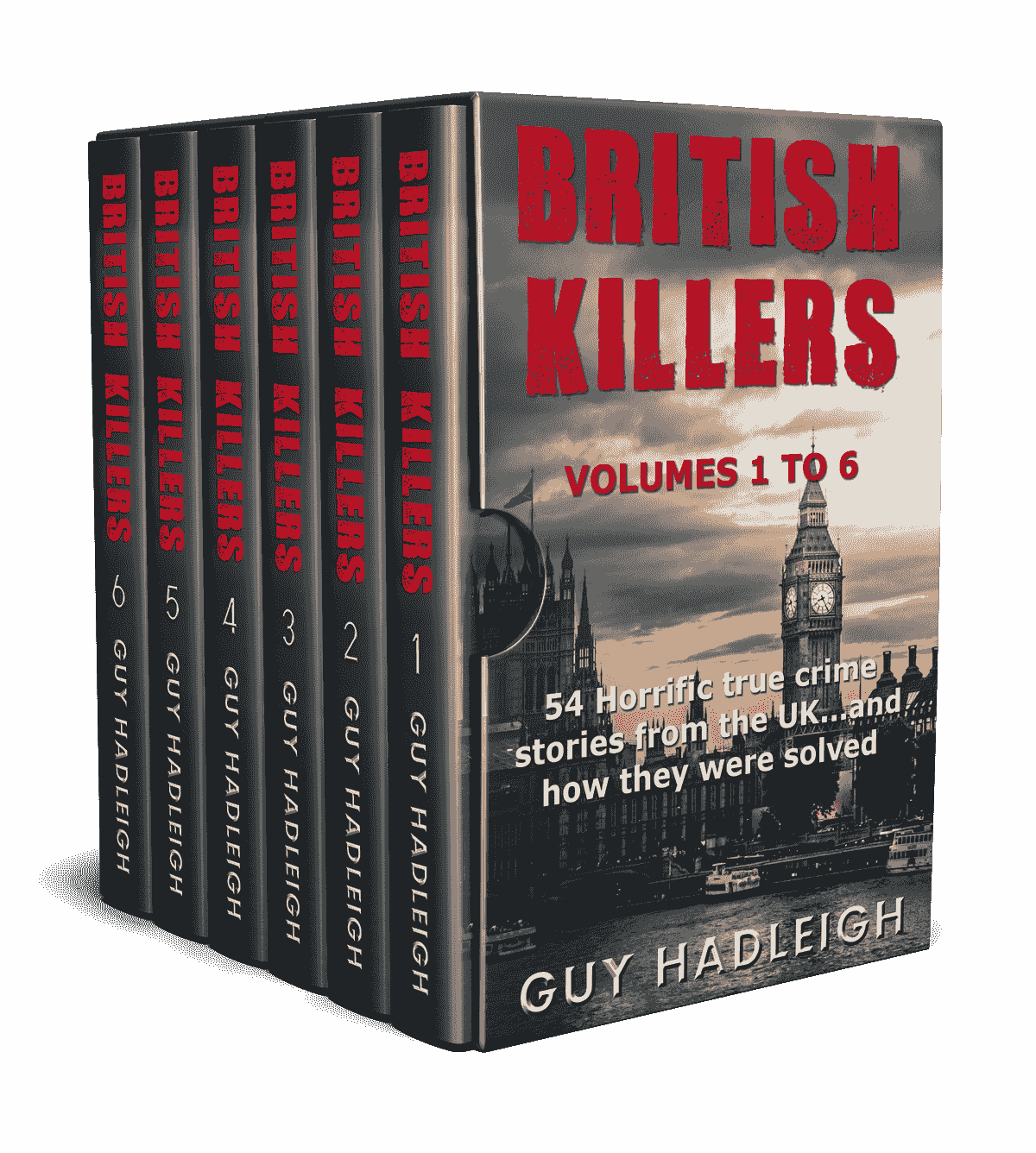
British Killers:
The Complete Collection
Six Volumes of Britain’s Darkest Crimes in one set
790 pages of shocking crime
From serial killers and gangsters to child murderers and spree shooters, this box set brings together six volumes of the most shocking true crimes in British history. Gripping accounts uncover notorious figures like Harold Shipman, the Kray Twins, Fred and Rose West, and Mary Bell, alongside lesser-known but equally haunting cases. A chilling journey into the crimes that scarred a nation.
A best selling series on Amazon with hundreds of reviews
📱Digital Version Just: $9.99

Serial Killer
Murder Map
- Book 1
Following in the Footsteps of England's Notorious Serial Killers
Take a chilling journey through the real-life crime scenes of Britain’s most notorious serial killers - described as they were then, and now.
Blending history, psychology, and a streak of gallows humour, this is no ordinary travel guide.
You’ll visit:
London’s hidden horrors -Christie in Notting Hill, Nilsen in Muswell Hill, Hardy in Camden.Yorkshire’s killing fields - Sutcliffe’s reign of terror, Neilson’s Black Panther crimes, Griffiths’ grotesque cannibal boasts.
Manchester’s betrayals -
Hardy the brute, Britland the poisoner, Shipman the doctor of death.
The Midlands’ shadows - The Sneinton stranglings and Philip Smith’s canal-side murders.
Available now on Amazon
📱Digital: $3.99
🎧Audio: $9.99
British Killers Series
Horrific true crime stories from the UK...and how they were solved
Available now on Amazon Kindle

British Killers
Volume 1

British Killers
Volume 2

British Killers
Volume 3

British Killers
Volume 4

British Killers
Volume 5

British Killers
Volume 6

British Killers
27 Story
Box Set

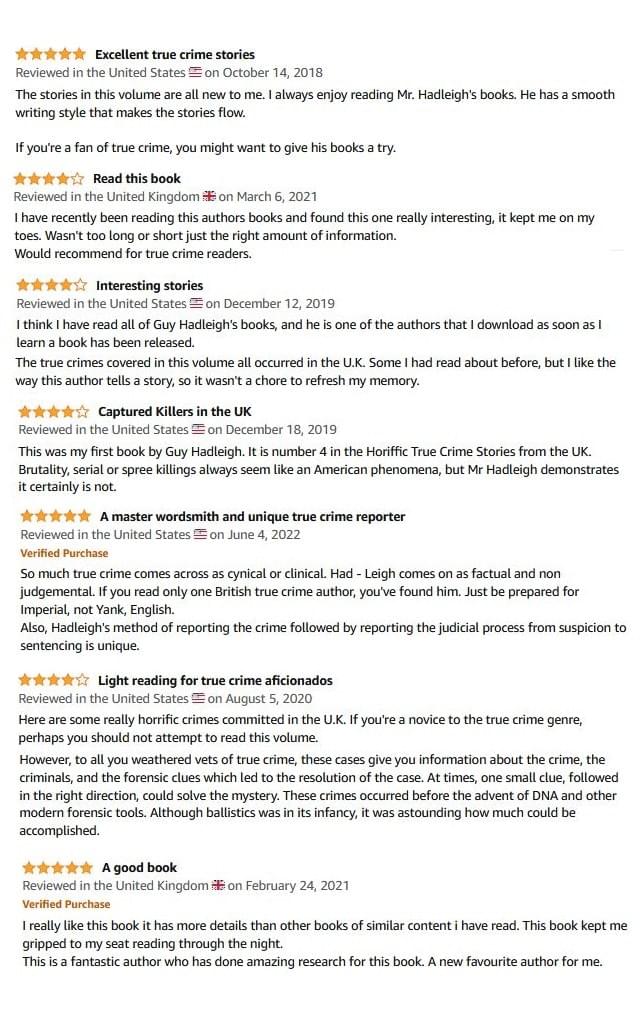
REVIEWS FOR THE BRITISH KILLERS SERIES
INFAMOUS
True Crimes and Trials
Volume #1
10 Infamous cases in each volume book plus a complilation box set with 30 stories
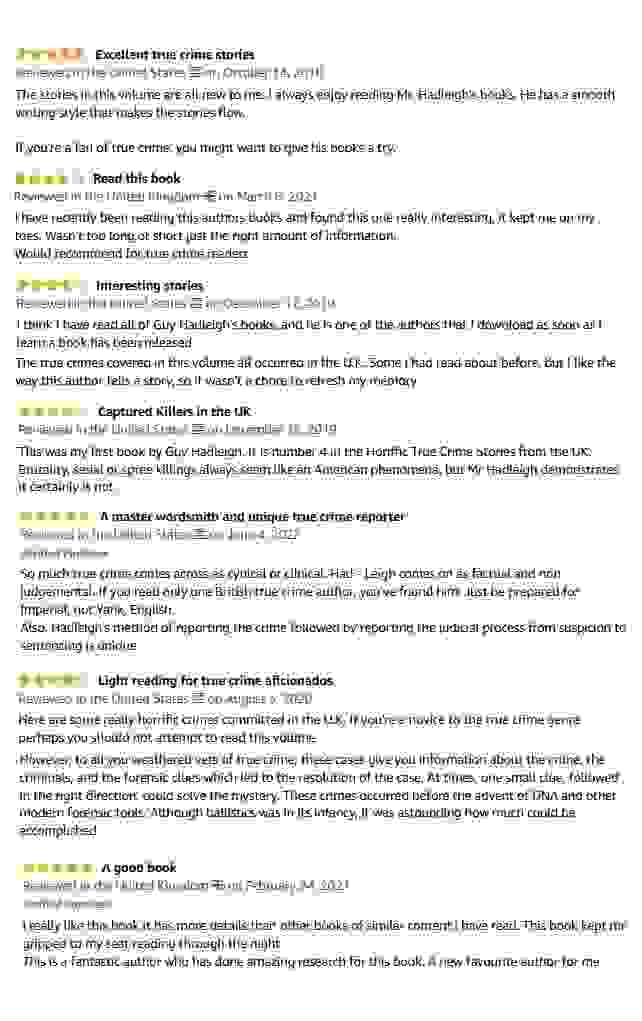
REVIEWS FOR THE INFAMOUS TRUE CRIMES AND TRIALS SERIES
INFAMOUS
True Crimes and Trials
Volume #2
10 INFAMOUS CASES
Now available on Amazon Kindle. Just click on the books image below to find out more..!


INFAMOUS
True Crimes and Trials
Volume #3
10 INFAMOUS CASES
Now available on Amazon Kindle. Just click on the book image below to find out more..!
Nearly Forgotten True Crimes Series
7 Infamous cases in each book

Volume #1

Volume #2

Volume #3
Listen to
BRITISH KILLERS
6 Book Series
54 Horrific true crimes and how they were solved...!


ASK GUY
Welcome to the Guy Hadleigh True Crime Knowledge Base
Whether you're a long-time reader, new to my books, or simply fascinated by the world of true crime, you've come to the right place.
I'm Guy Hadleigh, a British true crime author with more than 50 published books exploring real-life murders, serial killers, cold cases, forensic investigations, criminal psychology, and some of history's most intriguing criminal mysteries. My work focuses on factual, research-based storytelling, bringing forgotten cases and remarkable investigations back to life through carefully documented accounts.
This Knowledge Base has been created to answer the questions readers ask most often about my books, my research, and the real crimes that inspire my writing. Here you'll find information about my writing process, the historical sources I use, recommendations on where to start reading, explanations of true crime concepts, and insights into subjects such as forensic science, criminal profiling, and the psychology behind violent crime.
If you're looking for your next true crime read, researching a particular topic, or simply curious about the cases I've covered, I hope you'll find the answers you're looking for here.
Feel free to browse the sections below to explore specific topics, discover new books, and learn more about the fascinating world of historical true crime. I'll continue to expand this Knowledge Base over time, adding new questions and answers as I publish more books and readers raise new topics of interest.
Quick Facts
Author: Guy Hadleigh
Genre: Worldwide Historical True Crime
Books Published: 50+ books
Years Writing: Over 17 years
Based In: Thailand (Originally from the United Kingdom)
Primary Subjects: Historical murders, serial killers, cold cases, forensic investigations, criminal psychology, infamous criminals, forgotten crimes, unusual deaths, and real-life mysteries
Research Focus: Documented historical cases supported by newspapers, court records, police files, biographies, and other reliable historical sources
Writing Style: Factual, research-based, narrative true crime
Book Formats: Kindle eBooks, Audio and Paperback editions in many cases
Available Through: Amazon worldwide
Ideal Readers: Fans of historical true crime, criminal psychology, forensic science, and real-life murder investigations
At a Glance
• British true crime author with more than 50 published books.
• Specialises in historical true crime and carefully researched real-life criminal cases.
• Covers serial killers, cold cases, forensic investigations, criminal psychology, executions, famous murders, and forgotten crimes from around the world.
• Every story is based on documented historical sources, with a focus on factual accuracy and compelling storytelling.
• New books and collections are published regularly, bringing lesser-known and fascinating criminal cases to modern readers.
Who is Guy Hadleigh?
Guy Hadleigh is a British author specialising in historical true crime. For more than 17 years, he has researched and written about real-life murders, serial killers, cold cases, forensic investigations, criminal psychology, and some of history's most intriguing criminal mysteries.
With more than 50 published books, his work focuses on bringing documented criminal cases to life through factual, engaging storytelling. Rather than sensationalising crime, his aim is to preserve the stories behind significant investigations while exploring the people, motives, and forensic breakthroughs that helped solve—or failed to solve—some of the world's most fascinating cases.
Why do you write true crime?
I've always been fascinated by the darker side of human nature and the question that lies behind every major crime: why? Why does an ordinary person commit murder? What drives serial killers? How do investigators solve seemingly impossible cases? These questions have inspired years of research into criminal psychology, forensic science, and historical investigations. My goal isn't simply to recount horrific crimes but to understand the people, circumstances, and investigative methods behind them, while presenting each case with accuracy, respect, and compelling storytelling.
When did you start writing true crime?
I began writing true crime more than 17 years ago after discovering how many remarkable criminal cases had faded from public memory. While famous cases continue to receive attention, countless equally fascinating investigations remain largely forgotten despite their historical importance. I wanted to bring those stories back to life for modern readers by combining careful research with an accessible narrative style. Since then, true crime has become both a passion and a full-time writing career.
What inspires your books?
Inspiration often comes from discovering unusual or overlooked criminal cases that deserve to be remembered. A brief newspaper report, an old court transcript, or an obscure historical reference can lead to weeks of research. I'm particularly drawn to crimes that changed policing, introduced new forensic techniques, revealed extraordinary acts of deception, or exposed the darker aspects of human psychology. Every case has a story beyond the headlines, and uncovering those hidden details is one of the most rewarding parts of the research process.
What makes your books different?
My books focus on well-researched historical cases rather than sensational headlines. Each story is built from documented sources including newspaper archives, court records, biographies, police reports where available, and other reliable historical material. I also aim to explain the investigation itself—not simply the crime—so readers gain a better understanding of forensic science, criminal profiling, investigative techniques, and the historical context surrounding each case. Many of my books also highlight fascinating but little-known crimes that are rarely covered elsewhere.
How many books have you written?
To date, I have published more than 50 true crime books covering hundreds of documented criminal cases from Britain and around the world. My catalogue includes collections of historical murders, serial killer investigations, forensic case studies, cold cases, and themed anthologies exploring everything from poisoners and executioners to organised crime and extraordinary criminal mysteries. New books are released regularly as I continue researching new cases and expanding existing series.
What are your most popular books?
Readers particularly enjoy my collections of historical murder cases, serial killer investigations, and forensic crime stories. Among the most popular are the Macabre True Crimes & Mysteries series, the Murder Files collections, and my books exploring Britain's most notorious killers and lesser-known criminal cases. Many readers enjoy these anthologies because they contain multiple carefully researched cases, allowing them to discover fascinating crimes they may never have encountered before.
What topics interest you most?
Although I enjoy every aspect of true crime, I'm especially interested in criminal psychology, forensic science, historical murder investigations, serial offenders, cold cases, and the evolution of policing. I have a particular fascination with the psychological traits often referred to as the Dark Triad—psychopathy, narcissism, and Machiavellianism—and how these characteristics can influence criminal behaviour. I'm also drawn to forgotten historical crimes that reveal as much about the society of their time as they do about the criminals themselves.
About the Books
Which Guy Hadleigh book should I read first?
If you're new to my work, I'd recommend starting with one of my anthology collections. These books contain multiple carefully researched cases, allowing you to experience a wide variety of crimes, investigations, and criminal personalities in a single volume.
The Macabre True Crimes & Mysteries series is an excellent introduction, featuring a diverse mix of historical murders, serial killers, mysterious deaths, and unusual criminal investigations from around the world. If you're particularly interested in forensic investigations or famous murder cases, you'll also find collections that focus specifically on those subjects.
Many readers begin with one book and quickly discover new cases and series that match their particular interests.
Are your books based on real cases?
Yes. Every book I write is based on genuine criminal cases and documented historical events. I research each story using reliable sources such as newspaper archives, court records, historical publications, biographies, and other contemporary accounts wherever available.
While I write in an engaging narrative style, I don't invent crimes or fictionalise events. My aim is to present the facts as accurately as possible while making each case informative, compelling, and easy to follow.
Are your books suitable for readers who are new to true crime?
Absolutely. Although many long-time true crime enthusiasts enjoy my books, they're also written for readers who are discovering the genre for the first time.
Each case is explained clearly, with enough historical background and investigative detail to make it accessible without requiring any previous knowledge. Whether you're interested in criminal psychology, forensic science, or simply enjoy well-researched real-life stories, the books are designed to be informative and engaging for all levels of reader.
Do your books include photographs or illustrations?
This varies from book to book. Most Kindle editions focus primarily on the written narrative, allowing readers to immerse themselves in the story without interruption. Some books, (such as the Nearly Forgotten True Crimes Series) do include selected photographs or illustrations where appropriate, but the primary emphasis is always on carefully researched storytelling rather than visual content.
Are your books available worldwide?
Yes. My books are published through Amazon and are available to readers in most countries where Amazon Kindle and paperback books are sold. Kindle editions can usually be downloaded instantly, while paperback availability depends on Amazon's printing and distribution services in your region.
Are your books available in Kindle, Audio and paperback formats?
All of my books are available as Kindle eBooks, with many also available in paperback and audiobook editions.
Kindle is ideal for readers who enjoy instant access and reading across multiple devices, while paperback editions offer a traditional reading experience for those who prefer a physical book.
The available formats are listed on each book's Amazon product page.
Which books focus on serial killers?
Several of my books explore the lives, crimes, investigations, and capture of some of history's most notorious serial killers. Rather than concentrating solely on the murders themselves, these books also examine the psychology of the offenders, the investigative challenges faced by police, and the forensic techniques that ultimately helped solve many of the cases.
If serial killers are your main area of interest, you'll find numerous titles and collections dedicated to this fascinating but disturbing subject.
Which books cover unsolved murders and cold cases?
Many of my books feature unsolved murders, mysterious disappearances, and cold cases that continue to intrigue investigators and historians alike. Some cases remain unsolved despite decades of investigation, while others have only recently been re-examined using advances in forensic science and modern investigative techniques.
These stories explore the evidence, theories, and unanswered questions that continue to surround some of the world's most enduring criminal mysteries, giving readers an opportunity to examine the facts and draw their own conclusions.
Are your books suitable for readers interested in criminal psychology and forensic science?
Yes. While every book tells the story of a real crime, many also explore the psychological motivations behind criminal behaviour and the investigative methods used to solve complex cases.
You'll encounter subjects such as psychopathy, narcissism, deception, forensic pathology, DNA evidence, criminal profiling, and the evolution of modern policing. My aim is not only to tell the story of the crime but also to explain how investigators uncovered the truth and what we can learn from each case.
Research & Accuracy
Where do you find the information for your books?
My research begins with finding reliable information about the original case. Depending on the age and nature of the crime, this can involve contemporary newspaper reports, historical archives, court records, books and biographies, official documents, police information where available, and reputable online sources.
For older cases, newspaper archives can be particularly valuable because they provide contemporary accounts of what happened, what investigators knew at the time, and how the case developed. Later historical sources can then help fill in gaps, correct earlier assumptions, and provide additional context.
The research process varies considerably from one case to another. Some crimes have an extensive documentary record, while others are much more difficult to reconstruct because records have been lost or conflicting accounts have survived.
How accurate are the books?
Accuracy is one of the most important principles behind my work. My books are based on real criminal cases and documented historical events, and I make every effort to distinguish established facts from theories, allegations, disputed evidence, and speculation.
Historical true crime can be particularly challenging because accounts written at the time were not always accurate themselves. Newspapers sometimes reported incomplete information or repeated rumours, while later writers may have introduced their own interpretations.
Where significant uncertainty exists, I try to make that clear rather than presenting an unproven theory as established fact. The objective is to tell a compelling story without sacrificing the distinction between what is known and what remains uncertain.
What sources do you use?
The sources vary according to the individual case, but may include:
• Contemporary newspaper reports and newspaper archives
• Court records and trial reports
• Police information and investigative records where available
• Historical books and reference works
• Biographies and autobiographies
• Official reports and historical documents
• Reputable online archives and databases
• Academic and specialist publications
• Accounts from people directly connected with a case
For older crimes, no single source is necessarily sufficient. Comparing information from multiple sources is often essential to reconstructing events accurately.
How long does research take?
There is no fixed research time because every case is different. A relatively straightforward historical case may take days or weeks to research, while a complicated murder investigation with conflicting accounts, numerous suspects, or limited surviving records can require considerably longer.
The amount of research required also depends on the depth of the available documentation. Some famous cases have enormous amounts of material available, while obscure or forgotten crimes may require considerable effort simply to establish the basic facts.
Research is therefore an important part of the writing process, rather than something done after the story has been written.
Do you use police records?
Where police records or official investigative material are publicly available, they can be valuable sources of information. However, access to police records varies considerably depending on the country, age of the case, and relevant laws and archive policies.
For historical cases, surviving police material may be held in archives or referenced in court records, newspaper reports, books, or later investigations. I use such material where it is accessible and relevant, while recognising that not every historical case has a surviving police file available to researchers.
Do you use newspaper archives?
Yes. Newspaper archives are an important part of researching historical true crime.
Contemporary newspapers can provide a fascinating record of how a crime was reported as events unfolded. They may contain details about victims, suspects, witnesses, court proceedings, police investigations, and public reaction that are difficult to find elsewhere.
However, newspaper reports are not automatically treated as fact simply because they were published at the time. Early reporting can contain errors, speculation, sensationalism, or information that was later disproved. For that reason, newspaper accounts are compared with other available sources wherever possible.
How do you verify facts?
I use a process of cross-checking information between multiple sources wherever practical.
Important details such as names, dates, locations, relationships, criminal charges, court outcomes, and significant events are checked against more than one source when reliable independent sources are available.
When sources disagree, I look at the origin and reliability of the information rather than simply choosing the version that makes the best story. In some historical cases, however, there is no definitive answer. When that happens, the uncertainty itself becomes part of the story.
This approach is particularly important in true crime because there can be a significant difference between what was reported at the time, what was subsequently believed, and what the available evidence actually establishes.
Do you distinguish fact from theory?
Yes. This is particularly important when writing about unsolved murders, unidentified killers, disputed suspects, and historical cases surrounded by competing theories.
A theory should not be presented as a fact simply because it has been repeated many times. Where a case involves speculation or disagreement between investigators, historians, or other sources, I try to explain the different possibilities and make clear what is established, what is disputed, and what remains unknown.
In some cases, the mystery is precisely what makes the story fascinating. An unanswered question is more honest—and often more interesting—than an invented answer.
Do you use artificial intelligence when researching or writing?
AI tools can be useful research and writing assistants, but they are not treated as an unquestioned authority.
Tools such as ChatGPT and Claude can help locate information, identify possible sources, organise research, compare accounts, develop questions, and assist with drafting. However, AI-generated information can contain errors, including invented or incorrectly attributed facts.
For that reason, information generated by AI is treated as a starting point for investigation rather than automatically accepted as fact. Important claims should be checked against reliable source material before being incorporated into a book.
The final responsibility for the accuracy and presentation of my published work remains with me as the author.
True Crime Topics Explained
This section provides straightforward explanations of some of the most common terms, concepts and questions encountered in true crime. Whether you're new to the genre or an experienced reader, these short guides explain the subject without unnecessary jargon.
What Is a Cold Case?
A cold case is a criminal investigation that remains unsolved and has had no active investigative progress for a significant period of time. Most commonly, the term is associated with unsolved murders, disappearances and other serious crimes.
A case may become cold because investigators have exhausted the available evidence, witnesses cannot be located, suspects cannot be identified, or forensic technology available at the time was insufficient to provide answers.
However, "cold" does not necessarily mean forgotten. Advances in DNA analysis, forensic genealogy, digital databases and other investigative techniques can allow investigators to revisit evidence collected decades earlier.
Some cold cases are eventually solved when new evidence emerges, an old witness comes forward, or technology allows investigators to extract information that was impossible to obtain when the original crime occurred.
For true crime writers and readers, cold cases are particularly fascinating because they often contain unanswered questions, disputed theories and evidence that can be examined from a modern perspective.
What Is Forensic Science?
Forensic science is the application of scientific methods to criminal investigations and legal proceedings. It can help investigators establish what happened, identify people involved in a crime, connect suspects to locations or objects, and determine important facts about a case.
Forensic science encompasses many different disciplines, including DNA analysis, fingerprint examination, toxicology, forensic pathology, ballistics, trace evidence, digital forensics and forensic anthropology.
Some techniques have existed for more than a century, while others have developed rapidly with advances in technology. DNA profiling, for example, has transformed the investigation of many crimes and has allowed investigators to identify suspects or victims long after an offence occurred.
Forensic evidence is rarely a complete solution by itself. Investigators generally combine scientific evidence with witness statements, documentary evidence, investigative intelligence and other information to build a case.
The development of forensic science is one of the most fascinating aspects of historical true crime because techniques that were unavailable to investigators in the past can sometimes provide new answers to old mysteries.
What Is Criminal Profiling?
Criminal profiling is an investigative technique used to develop possible characteristics of an unknown offender based on evidence from a crime and the behaviour demonstrated during the offence.
A profile might consider factors such as the offender's behaviour, choice of victim, method of operation, geographical patterns, level of planning and other characteristics of the crime.
The purpose of profiling is not to identify a specific person with certainty. Instead, it may help investigators develop investigative leads, narrow possibilities or better understand the behaviour of an unknown offender.
Criminal profiling has been popularised by books, television and films, sometimes giving the impression that profilers can identify a murderer simply by examining a crime scene. Real investigations are considerably more complicated.
Profiling is best understood as one investigative tool among many. Physical evidence, witness testimony, forensic analysis and traditional police work remain fundamental to solving crimes.
What Is the Dark Triad?
The Dark Triad is a term used in psychology to describe three personality traits: narcissism, Machiavellianism and psychopathy.
Narcissism generally involves characteristics such as an exaggerated sense of self-importance, a strong need for admiration and a lack of empathy. Machiavellianism is associated with manipulation, strategic behaviour and a willingness to exploit others. Psychopathy is commonly associated with characteristics such as shallow emotional responses, reduced empathy, manipulative behaviour and a lack of remorse.
The Dark Triad does not mean that someone displaying one or more of these traits is automatically violent or criminal. Most people with personality traits associated with the Dark Triad are not serial killers or murderers.
The concept is nevertheless interesting in true crime because some documented offenders have displayed combinations of these characteristics. Examining personality and behaviour can sometimes provide insight into the motivations and methods of particular criminals.
What Is Forensic Genealogy?
Forensic genealogy is an investigative technique that combines genetic analysis with genealogical research to help identify unknown individuals connected to a crime.
In some investigations, DNA recovered from a crime scene can be compared with information contained in genetic genealogy databases. Investigators may then use family relationships and genealogical records to develop possible family trees and identify a person who could be connected to the DNA.
The technique has become particularly significant in solving historical cold cases. Crimes that remained unsolved for decades can sometimes be revisited because DNA evidence collected long ago can now be analysed using techniques that were unavailable when the original investigation took place.
Forensic genealogy can be highly effective, but it is also complex and subject to legal, ethical and privacy considerations. DNA evidence still needs to be properly analysed and confirmed through conventional investigative procedures.
What Is a Serial Killer?
A serial killer is generally understood to be a person who unlawfully kills two or more victims in separate incidents. The murders take place on different occasions, distinguishing serial murder from mass murder, where multiple victims are killed during a single incident.
Serial murder differs from mass murder, where multiple victims are killed during a single incident, and spree killing, which generally involves multiple murders occurring across different locations within a relatively short period.
Serial killers can have very different motivations and behaviours. Some may select victims according to particular characteristics, while others may appear to choose victims opportunistically. Some offenders carefully plan their crimes, while others become increasingly reckless.
The subject is one of the most widely discussed areas of true crime, partly because serial murder raises difficult questions about psychology, motivation, victim selection, investigative failure and the ability of offenders to evade detection.
Understanding serial killers requires looking beyond the popular myths surrounding them and examining the documented evidence from individual cases.
What Makes Historical Crimes Fascinating?
Historical crimes offer something that modern true crime stories often cannot: the opportunity to examine a criminal investigation within a completely different social, technological and historical environment.
Investigators working a murder in the nineteenth or early twentieth century did not have access to modern DNA profiling, sophisticated databases, CCTV, mobile-phone records or many of the forensic techniques routinely available today.
This can make historical cases both challenging and fascinating. Investigators often had to rely on witness testimony, fingerprints, physical evidence, detective work and sometimes little more than instinct and persistence.
Historical crimes also reveal something about the societies in which they occurred. Attitudes towards victims, policing, class, gender, poverty, punishment and justice have changed considerably over time.
For me, one of the greatest attractions of historical true crime is discovering cases that have largely disappeared from public memory. A crime may have been front-page news a hundred years ago and almost completely forgotten today.
Why Are Some Murders Never Solved?
There is rarely a single reason why a murder remains unsolved. Investigators may have insufficient evidence, unreliable witnesses, no identifiable suspect, missing records or forensic evidence that cannot provide a useful result.
Historical cases face additional problems. Evidence may have deteriorated or disappeared, witnesses and suspects may have died, investigative records may have been lost, and forensic techniques available at the time may have been inadequate.
Some investigations also suffer from mistakes made during the original inquiry. Evidence may not have been collected correctly, suspects may have been overlooked, or investigators may have followed an incorrect theory.
In other cases, investigators may know who committed a murder but lack sufficient evidence to prove it.
Modern technology has solved some long-standing cases, particularly through advances in DNA analysis, forensic genealogy and digital investigation. However, technology cannot recreate evidence that no longer exists.
That is why some murders remain mysteries for decades—or even centuries. The absence of an answer does not necessarily mean there was no investigation; sometimes the evidence needed to provide that answer simply no longer exists.
Absolutely. This section can become particularly strong because criminal psychology is one of the subjects most closely associated with your true crime work. I've kept the answers accessible while avoiding the common mistake of presenting psychological concepts as simple explanations for criminal behaviour.
Criminal Psychology
Criminal psychology explores the thoughts, behaviours, motivations and personality characteristics associated with people who commit crimes. It can help us understand patterns of behaviour, but it is important to remember that there is no single psychological profile that explains every murderer or serial killer.
Why Are Psychopaths So Fascinating?
Psychopathy is one of the most discussed subjects in true crime because it raises difficult questions about empathy, conscience, manipulation and human behaviour.
People are often fascinated by the apparent contradiction between someone who can appear charming, intelligent or completely ordinary while also being capable of extreme cruelty. Some individuals with pronounced psychopathic traits can be highly manipulative and skilled at presenting a convincing public persona, making it difficult for others to recognise their true behaviour.
However, popular culture has created many myths about psychopathy. Not everyone with psychopathic traits is violent, and not every violent offender is a psychopath.
What makes psychopathy particularly relevant to true crime is the opportunity to examine how personality, behaviour, environment and individual circumstances can interact. Looking beyond the label can sometimes reveal much more about a particular offender than simply describing someone as "evil."
What Is Narcissism?
Narcissism refers to a range of personality characteristics associated with an inflated sense of self-importance, a need for admiration, entitlement and difficulties with empathy.
Everyone can display narcissistic behaviour from time to time. Narcissistic traits exist on a spectrum, and having some narcissistic characteristics does not mean that a person has narcissistic personality disorder or is likely to commit a crime.
In criminal psychology, narcissism can become relevant when examining offenders whose behaviour appears strongly driven by status, control, admiration, humiliation or a desire to protect an exaggerated sense of self.
In some cases, an offender may react particularly badly to rejection, criticism or perceived humiliation. However, narcissism alone does not explain violent behaviour.
Understanding the distinction between ordinary narcissistic traits, severe narcissistic characteristics and a clinical diagnosis is important when discussing real criminal cases.
What Is Machiavellianism?
Machiavellianism is a psychological concept associated with manipulation, strategic thinking, deception and a willingness to exploit other people to achieve a desired outcome.
The term comes from the reputation and ideas associated with Niccolò Machiavelli, although modern psychological research uses the term in a more specific way to describe a personality trait.
A person displaying strong Machiavellian characteristics may be calculating, manipulative and willing to use other people as a means to achieve personal objectives.
Machiavellianism is one of the three characteristics commonly included in the Dark Triad, alongside narcissism and psychopathy.
As with the other Dark Triad traits, Machiavellianism should not automatically be equated with criminality. A person can display manipulative or calculating behaviour without committing violent crime.
In true crime, however, the concept can provide an interesting framework for examining offenders who use deception, manipulation and long-term planning to control victims or evade detection.
Can Killers Be Rehabilitated?
There is no simple answer because "killer" describes a behaviour, not a single psychological type.
People who commit homicide can have very different backgrounds, motivations and psychological characteristics. Some may have committed a single violent act under particular circumstances, while others may have demonstrated persistent patterns of violence, manipulation or antisocial behaviour.
The possibility of rehabilitation therefore depends heavily on the individual. Factors such as personality, motivation, willingness to change, mental health, criminal history and the nature of the offence can all be relevant.
Some offenders can change their behaviour significantly, while others present much greater challenges for rehabilitation. Certain personality characteristics, particularly persistent antisocial or psychopathic traits, can make treatment and behavioural change more difficult, but they do not provide a simple prediction of future behaviour.
Ultimately, rehabilitation is a complex psychological and correctional issue rather than something that can be determined simply by the crime someone committed.
Why Do People Become Serial Killers?
There is no single explanation for why someone becomes a serial killer.
Serial killers are not all alike, and researchers have identified a wide variety of backgrounds, motivations and behavioural patterns among known offenders. Some have histories involving childhood trauma, abuse, neglect or dysfunctional family environments. Others do not fit these patterns.
Possible contributing factors can include personality characteristics, developmental experiences, neurological factors, fantasies, sexual motivations, desire for power or control, grievance, opportunity and exposure to violence. In many cases, several factors may interact rather than one factor causing the behaviour.
It is also important not to assume that childhood abuse, mental illness or an unhappy upbringing inevitably produces a violent offender. The overwhelming majority of people who experience difficult circumstances do not become killers.
Understanding serial murder therefore requires looking at the individual offender and the evidence surrounding their life and crimes rather than searching for one universal explanation.
Are Psychopaths Born or Made?
The answer appears to involve both biological and environmental influences.
Research suggests that traits associated with psychopathy can have a heritable component, meaning that genetics may influence characteristics such as emotional responsiveness, impulsivity and interpersonal behaviour. At the same time, environmental experiences—including childhood relationships, neglect, abuse, social environment and other developmental factors—can influence how personality develops.
There is therefore no simple "born psychopath" versus "made psychopath" explanation.
It is also important to distinguish psychopathic traits from criminal behaviour. A person can display some characteristics associated with psychopathy without becoming violent or committing serious crime.
Modern psychological research increasingly views behaviour as the result of complex interactions between biological predispositions, development, environment and individual choices. In true crime, this makes the question particularly interesting because the circumstances surrounding each offender can be very different.
Does Mental Illness Cause Violent Crime?
Mental illness and violent crime are often wrongly treated as though they are synonymous. They are not.
Most people experiencing mental illness are not violent, and many people who commit serious crimes do not have a major mental illness.
Criminal behaviour can arise from many different factors, including personality, social circumstances, substance use, opportunity, learned behaviour, relationships, financial motives, revenge and individual decisions.
Some offenders may have significant psychiatric disorders that affect their behaviour, but this does not mean mental illness itself is an explanation for their crime.
When examining a true crime case, it is therefore important to distinguish between a diagnosed mental disorder, personality characteristics, unusual behaviour and the motivations established by the evidence.
Can Criminal Profiling Explain a Killer's Psychology?
Criminal profiling can sometimes help investigators develop hypotheses about an unknown offender's behaviour and characteristics, but it cannot provide a definitive psychological diagnosis from a crime scene.
A profile may consider factors such as victim selection, behaviour during the offence, level of organisation, location, timing and patterns across multiple crimes.
However, profiling is only one investigative tool. It should be considered alongside physical evidence, forensic examination, witness testimony, intelligence and other investigative methods.
The dramatic version of profiling often shown in television dramas—where an investigator examines a few clues and immediately identifies the killer—is very different from the uncertainty and complexity of real criminal investigations.
For readers of true crime, understanding that distinction is important. The psychology of an offender can provide valuable insights, but evidence remains fundamental.
Historical Crime
Historical crime is more than a collection of old murder stories. These cases provide a window into the societies, policing methods, investigative techniques and attitudes towards justice that existed at the time. They can also reveal how dramatically our ability to investigate crime has changed.
Why Study Old Murder Cases?
Old murder cases allow us to examine crime in a world that was very different from our own.
Investigators often had to work without DNA testing, CCTV, computerised databases, mobile-phone records or many of the forensic techniques that are now taken for granted. They relied heavily on witness statements, physical clues, fingerprints, detective work and sometimes simple persistence.
Studying these cases therefore provides an insight into how investigators solved—or failed to solve—serious crimes using the tools available to them.
Historical murders can also reveal changing attitudes towards victims, suspects, punishment and justice. What was considered acceptable or believable a century ago may look very different today.
For me, one of the greatest attractions is that many remarkable cases have disappeared from public memory. Researching them can uncover fascinating stories that deserve to be remembered.
How Have Criminal Investigations Changed?
Criminal investigations have changed enormously over the past century.
Earlier investigators relied primarily on witness testimony, physical evidence, fingerprints, photographs, documents and detective work. Many modern investigative tools either did not exist or were still in their infancy.
Today investigators can use DNA profiling, digital forensics, CCTV, mobile-phone data, sophisticated databases, forensic genealogy and increasingly advanced methods of analysing physical evidence.
This does not mean that historical detectives were ineffective. In many cases they achieved remarkable results despite having far fewer technological resources.
The difference is that modern investigators can often recover and analyse information that would have been invisible to detectives in the past.
This is one reason why cold cases are so fascinating. A murder that could not be solved fifty or a hundred years ago may contain evidence that modern technology can finally interpret.
What Was Policing Like in Victorian Britain?
Policing in Victorian Britain was very different from modern policing.
The Metropolitan Police had been established in London in 1829, and professional policing gradually developed throughout Britain during the nineteenth century. However, police forces had limited resources compared with those available today.
Detectives did not have access to DNA profiling, electronic databases, CCTV or modern forensic laboratories. Communication and transportation were also considerably slower.
Investigators depended heavily on witnesses, informants, physical evidence, observation and detective work. Newspapers could also play a major role in publicising crimes and influencing public opinion.
The period was nevertheless an important stage in the development of modern criminal investigation. Fingerprinting, photography and other scientific approaches to crime would gradually become increasingly important.
Victorian murder cases therefore provide an opportunity to see modern investigative practices developing from much simpler beginnings.
Why Are Forgotten Crimes Important?
A crime does not become historically insignificant simply because people stop talking about it.
Many murders that once attracted enormous public attention have gradually disappeared from popular memory. The victims, investigators and circumstances can become little more than a name in an old newspaper archive.
Forgotten crimes are important because they preserve the human stories behind historical events. They can also reveal information about how society, policing and the justice system operated at a particular time.
There is another reason to revisit them: history is selective. Some cases remain famous because books, films and television programmes have repeatedly retold them, while equally remarkable crimes receive little attention.
Researching forgotten cases can therefore uncover stories that are genuinely new to modern readers—not because the crimes themselves are new, but because their stories have been largely forgotten.
What Can We Learn From Historical Murders?
Historical murders can teach us much more than the circumstances of an individual death.
They can show how criminal investigations were conducted, how evidence was interpreted, how suspects were identified and how courts approached serious offences.
They also demonstrate how forensic science has evolved. Techniques that are routine today were unavailable to investigators in earlier periods, while some methods once considered revolutionary have since been replaced or improved.
Historical cases can also reveal the social conditions surrounding crime. Poverty, class, gender, working conditions, changing attitudes towards women and children, and differences in policing can all influence the way a crime was investigated and reported.
Perhaps most importantly, historical true crime reminds us that every case involved real people. Behind the newspaper headlines and historical records were victims, families, investigators, witnesses and communities whose lives were permanently changed.
Why Are Historical Crimes Still Relevant Today?
The passage of time does not necessarily remove the questions raised by a murder.
Modern investigators and researchers can revisit historical cases using new technology, newly discovered documents and different perspectives. In some instances, old evidence can provide new information that investigators could not obtain when the crime occurred.
Historical crimes can also help us understand the development of modern policing and forensic science. Many techniques now considered standard were developed in response to problems encountered during earlier investigations.
Perhaps most importantly, historical cases demonstrate that today's investigative methods were not created in isolation. Modern criminal investigation has evolved through decades of experience, mistakes, discoveries and technological advances.
Studying the crimes of the past can therefore help us understand both where criminal investigation came from and how it continues to develop.
Reader Recommendations
Not sure where to start? If you're new to my books, the easiest approach is to choose a subject that interests you most.
My books cover a wide range of real criminal cases, from notorious serial killers and Victorian murders to forensic investigations, female killers and bizarre crimes. Here are some starting points based on your particular interests.
If You Enjoy Serial Killers...
If serial killers are your main interest, start with my British Serial Killers series or the Murder and Mayhem trilogy.
BRITISH KILLER SERIES:
Overview on this website: British Serial Killers — 6-Book Series
Available on Amazon here: British Serial Killers — 6-Book Series
This six-book series explores some of Britain's most notorious serial killers and the crimes that made them infamous. The books examine the offenders, their victims, investigations and the circumstances surrounding their eventual capture—or, in some cases, the questions that remain.
Best for: Readers who want a dedicated series focusing on British serial killers.
MURDER AND MAYHEM SERIES:
Overview on this website: Murder and Mayhem – 3 Book Series
Available on Amazon here: Murder and Mayhem – 3 Book Series
This three-book collection takes a broader look at murderous crimes and criminal personalities, providing a mixture of disturbing and fascinating cases.
Best for: Readers who enjoy variety but want their true crime with plenty of murder, mystery and mayhem.
If You Enjoy Forensic Investigations...
For readers fascinated by the science behind solving crimes, I'd recommend two titles.
Flesh, Fire & Code: True Crime Cases — Forensic Investigations
This collection focuses specifically on the forensic side of true crime, examining cases in which scientific investigation played an important role.
Overview on this website: Flesh, Fire & Code
Available on Amazon here: Flesh, Fire & Code
Best for: Readers who want to understand how forensic evidence can help investigators uncover the truth.
Forensic Investigations — Volume 1: 10 True Crimes Solved by Forensic Science
This collection features ten real criminal cases in which forensic science helped investigators solve the crime.
Available on Amazon here: Forensic Investigations — Volume 1: 10 True Crimes Solved by Forensic Science
Best for: Readers who enjoy the combination of murder investigation, scientific evidence and detective work.
If You Enjoy Female Killers...
Very Bad Women — Volumes 1 & 2
The Very Bad Women series focuses on female criminals and murderers whose crimes demonstrate that serious violence is certainly not restricted to male offenders.
Available on Amazon here: Very Bad Women 2 Book Series
These books explore the crimes, backgrounds, motives and investigations surrounding women who became involved in some extraordinary and disturbing cases.
Best for: Readers interested in female murderers and the psychology behind their crimes.
If You Enjoy Strange, Bizarre or Unusual Crimes...
Macabre True Crimes & Mysteries — Volumes 1–5
The Macabre True Crimes & Mysteries collection is an excellent choice if you enjoy discovering unusual cases that go beyond the familiar true crime stories.
Across five volumes, (number 6 coming soon), the series explores a wide variety of real crimes, mysteries, murders and strange cases from different periods and locations.
Overview on website: Macabre True Crimes & Mysteries – 5 Book Series
Available on Amazon here: Macabre True Crimes & Mysteries – 5 Book Series
Best for: Readers who never know quite what they're going to discover next.
If you enjoy true crime because of the sheer variety of human behaviour and the stranger side of criminal history, this is an ideal series to explore.
If You Enjoy Victorian Crime...
Nearly Forgotten True Crimes — Volumes 1–3
The Nearly Forgotten True Crimes series takes readers back into the world of historical crime, including cases from the Victorian era and surrounding periods.
These are crimes that once generated headlines, investigations and public interest but have largely disappeared from modern memory.
Overview on website: Nearly Forgotten True Crimes — Series Page
Available on Amazon here: Nearly Forgotten True Crimes — Series Page
Best for: Readers fascinated by the Victorian era, historical murders, early policing and crimes that have been largely forgotten.
If You Enjoy Cold Cases and Unsolved Mysteries...
If your particular fascination is with unsolved murders, cold cases and mysteries that still have unanswered questions, look for books in my catalogue featuring historical unsolved crimes and unresolved investigations.
These cases are especially intriguing because they allow readers to examine the evidence, competing theories and unanswered questions surrounding crimes that have resisted definitive solutions.
Best for: Readers who enjoy mysteries where the final answer isn't always available.
NOTE: I have not yet written any complete books dedicated to cold cases. However there are several spread around my library. What do you think? Should I write a series specifically around cold cases? Let me know what you think at guy@guyhadleigh.net
If You're Still Not Sure Where to Start...
If you don't have a particular subject in mind, Macabre True Crimes & Mysteries is a good starting point because of the variety of cases it contains.
Overview on website: Macabre True Crimes & Mysteries – 5 Book Series
Available on Amazon here: Macabre True Crimes & Mysteries – 5 Book Series
If you prefer a particular theme, choose the category above that interests you most. One of the advantages of true crime anthologies is that you can explore several different cases in a single book—and often discover subjects you hadn't previously considered.
You can explore my complete collection of true crime books on my website and find the series that best matches your interests.
Publishing & Writing
Writing true crime is more than simply finding an interesting murder and telling the story. Each book involves research, verification, organisation, writing, editing and publishing. Here's a little insight into how I approach the process:
How Do You Write Your Books?
My books begin with the case, not the writing.
I start by identifying a crime or collection of crimes that I believe will be interesting to readers. I then research the available information, looking at contemporary reports, historical sources, court material, books, archives and other reliable sources where available.
Once I have gathered enough information, I organise the material into a coherent narrative. I want the reader to understand not only what happened, but also who the people involved were, how the investigation developed, what evidence was discovered and what ultimately happened.
I generally write in an accessible narrative style rather than presenting the material as a dry historical report. The objective is to make the reader feel that they are following the investigation while remaining faithful to the documented facts.
How Long Does It Take to Write a Book?
How long is a piece of string?
There isn't a standard timeframe because the amount of research required varies enormously from one project to another.
An anthology containing multiple historical cases requires research into each individual story, while a book concentrating on one complicated investigation may require extensive research into a single case.
The process can involve finding and comparing sources, organising timelines, checking names and dates, writing the individual stories, editing and proofreading, and preparing the finished manuscript for publication.
For that reason, a book is not simply a matter of sitting down and writing a certain number of words each day. The research and preparation can take as much time as the actual writing.
Do You Use AI?
Yes. I use artificial intelligence tools such as ChatGPT and Claude as part of my research and writing workflow.
However, I don't regard AI as an authority or a substitute for research. AI can be extremely useful for organising information, generating research questions, identifying areas that need further investigation, comparing material, brainstorming ideas and helping with the drafting process.
It can also make mistakes. AI systems can sometimes produce inaccurate information, misunderstand sources or present an unsupported claim as fact.
For that reason, I treat AI as a research and writing assistant rather than a source of truth. Important factual information still needs to be checked against reliable source material.
I believe the important question isn't whether an author uses AI, but how responsibly they use it.
Do You Write Every Day?
Writing a true crime book doesn't necessarily mean writing new words every day.
Some days are spent researching a case, checking sources, organising material or working on the structure of a book. Other days may involve writing, editing, proofreading, formatting or preparing a manuscript for publication.
The important thing is maintaining progress rather than simply counting words.
Research-heavy nonfiction in particular requires periods of investigation and thinking before the writing can begin. Sometimes the most productive part of a writing day produces very few finished sentences but uncovers an important piece of information that makes the eventual story much better.
How Do You Choose the Cases You Write About?
I'm particularly attracted to cases that have one or more of the following characteristics:
• An unusual or unexpected crime
• A fascinating investigation
• An unusual forensic development
• A notorious or psychologically interesting offender
• An unsolved mystery
• A forgotten historical case
• A significant development in policing
• A case with an unexpected conclusion
• A crime that reveals something interesting about the society in which it occurred
I'm especially interested in cases that are not already endlessly familiar to readers. There is enormous value in discovering a remarkable crime that has largely disappeared from public attention.
Do You Write About Recent Crimes?
My primary interest is historical and documented true crime, particularly cases that have enough distance from the original events to allow them to be examined from a historical perspective.
Older cases are often especially interesting because they show how dramatically investigative techniques have changed. They also allow us to examine crimes without being completely dependent on the immediate media coverage surrounding a recent event.
That doesn't mean recent crimes are uninteresting. It simply reflects my particular focus as a writer.
What Advice Would You Give Someone Who Wants to Write True Crime?
My first piece of advice is simple: research before you write.
An interesting crime is not automatically an interesting book. Before beginning, make sure there is enough reliable information available to tell the story properly.
I'd also recommend:
Don't rely on a single source. Compare accounts and investigate discrepancies.
Separate fact from theory. If something isn't established, say so.
Don't confuse sensationalism with storytelling. A compelling story doesn't require exaggeration.
Think about the investigation, not just the crime. Readers want to know how investigators discovered what happened.
Choose cases carefully. Lesser-known crimes can be just as fascinating as famous ones.
Use AI responsibly. AI can save enormous amounts of time, but it can also generate convincing nonsense. Verify important information independently.
And finally, write for the reader. However fascinating a case may be to you, the reader needs a clear narrative, good pacing and a reason to keep turning the pages.
What Makes a Good True Crime Story?
For me, a good true crime story combines three things: a fascinating case, reliable research and compelling storytelling.
The crime itself may be extraordinary, but the story becomes much more interesting when the reader understands the people involved, the circumstances surrounding the crime, the investigation, the evidence and the unanswered questions.
A good true crime story doesn't need to invent drama. Real life usually provides enough.
The writer's job is to uncover that drama through research and present it in a way that keeps the reader engaged while respecting the difference between documented fact and speculation.
Frequently Asked Questions
Here are answers to some of the practical questions readers often have about Guy Hadleigh, his books and staying in touch.
Can I Contact Guy Hadleigh?
Yes. If you'd like to get in touch, you can email me direct at guy@guyhadleigh.net . I'm always interested in hearing from readers, particularly when they have questions about a book, a particular crime, or a case they think might make an interesting subject for future research.
Do You Sign Books?
Signed copies are not currently a regular part of my book offering. My books are primarily published and distributed through Amazon, making them readily available to readers in different countries.
If signed editions or other special editions become available in the future, details will be announced on the website.
Do You Have a Newsletter/Subscriber list?
Yes. I have an email list for readers who want to hear about new books, free true crime stories, recommendations and other news from Guy Hadleigh.
It’s also a good way to discover new cases and books without having to regularly check the website.
Join the Guy Hadleigh mailing list →
Are Your Books Available in Libraries?
Some Guy Hadleigh titles may be available through libraries, depending on the country, library system and individual title.
Because my books are published internationally through Amazon, availability in libraries can vary considerably. If you are looking for a particular title, the best approach is to search your local library catalogue or ask the library whether they can obtain the book.
Where Can I Buy Guy Hadleigh Books?
My books are primarily available through Amazon, where readers can find Kindle editions and, for many titles, paperback editions.
Because Amazon operates in multiple international markets, availability and formats can vary according to your location.
You can browse my books through the Books section of this website, where you'll find information about my different series and collections.
Browse Guy Hadleigh's Books →
How Often Do You Publish New Books?
I regularly work on new true crime books and collections. The publication schedule varies depending on the size of the project, the amount of research required and the time needed to write, edit and prepare each book for publication.
Researching historical true crime can be unpredictable. Some cases can be researched relatively quickly, while others require considerably more time because of conflicting accounts, difficult-to-find sources or gaps in the historical record.
Rather than publishing simply to meet a deadline, I prefer to take the time necessary to produce a book that provides readers with interesting, well-researched cases.
Do You Offer Free True Crime Stories?
Yes. From time to time I make selected true crime stories available to readers for free.
These stories provide an opportunity to discover my writing style and explore some of the fascinating real-life cases that have inspired my books.
Just subscribe and receive them instantly in you inbox.
FREE 5 Macabre True Crime Stories →
Can I Suggest a Crime for You to Research?
Absolutely. If you know of an unusual, forgotten or fascinating historical crime that you think deserves to be investigated further, you're welcome to get in touch.
There is no guarantee that every suggested case will become a book or story, but reader suggestions can sometimes lead to interesting research.
Where Can I Find Out More About Guy Hadleigh?
The best place to start is this website. The Ask Guy Knowledge Base provides information about me, my books, my research methods and the true crime subjects I cover.
You can also explore the Home Page and Blog sections for individual titles, stories and additional information about historical crimes and criminal investigations.
Looking for Something Specific?
If you're searching for information about a particular criminal, murder case, book or true crime subject, use the navigation on this website or the search function to explore further.
The Guy Hadleigh website is continually expanding, with new books, articles, cases and research added regularly.
Guy Hadleigh is a British true crime author specializing in historical murders, forgotten criminal cases, forensic investigations, criminal psychology, and narrative nonfiction. His books draw on documented sources to explore real crimes from around the world, combining factual research with compelling storytelling.
SEE ALL MY BOOKS HERE
Contact me at Guy@GuyHadleigh.net